
Applying for a digital loan only to receive a rejection notice can feel frustrating, especially when the application looked complete. In the Philippines, many online lenders use automated verification systems, digital scoring models, fraud filters, and risk-assessment tools that review borrower data within minutes. Even small inconsistencies can trigger rejection.
Borrowers are commonly denied because of blurry IDs, incomplete employment information, unstable cash flow, duplicate applications, failed verification calls, or mismatched personal details. Some applicants also get flagged by fraud-detection systems when device behavior, location data, or submitted documents appear suspicious. The good news is that many rejection triggers can be corrected before reapplying.
Why Online Loan Applications Get Rejected So Often in the Philippines
Digital lending platforms approve thousands of applications daily, but they also reject a large number automatically. Many borrowers assume rejection only happens because of bad credit. In reality, Philippine fintech lenders evaluate far more than credit history.
Modern online loan systems analyze:
- Device behavior
- Identity consistency
- Income stability
- Existing debt obligations
- Contact reliability
- E-wallet activity
- Employer legitimacy
- Fraud indicators
- Application patterns
Most lenders now rely on automated scoring systems before a human verification team reviews the file. That means even minor errors can lower approval probability instantly.
For borrowers searching for a quick loan online Philippines, preparation matters as much as eligibility itself.
The Most Common Rejection Triggers Online Lenders Look For 🚨
Incomplete or Inconsistent Personal Information
One of the biggest rejection causes is inconsistent borrower data.
Examples include:
- Different spellings between ID and application form
- Wrong birthdate format
- Inconsistent addresses
- Nicknames instead of legal names
- Different mobile numbers across applications
Online loan systems compare submitted information against internal databases, telecom patterns, and identity-verification records. If details do not match, the system may automatically flag the application.
Borrowers who repeatedly edit information during application submission may also trigger fraud filters.
Blurry or Invalid IDs
Many rejected applicants upload:
- Cropped IDs
- Dark photos
- Expired IDs
- Screenshots instead of actual images
- IDs with glare or missing corners
Philippine digital lenders increasingly use OCR (optical character recognition) and AI-assisted identity validation tools. If the system cannot clearly read the document, the application may fail before human review even begins.
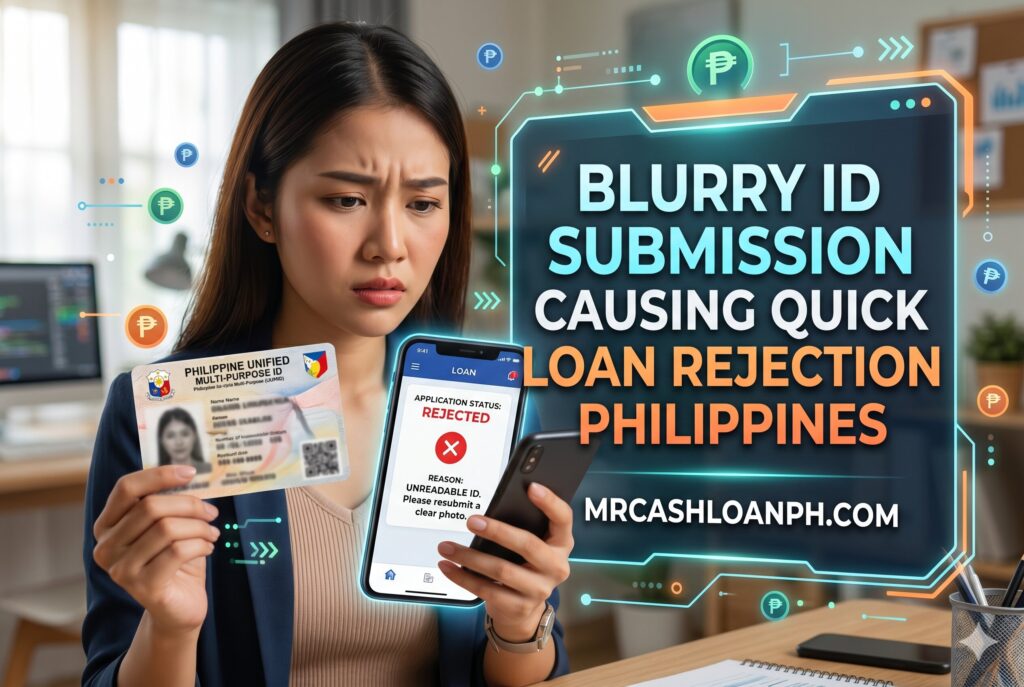
Borrower uploading unclear government ID during online loan application in the Philippines
Verification teams also compare selfies against IDs. Poor lighting or facial mismatch may trigger rejection.
Failed Employment or Income Verification
Lenders evaluate repayment capability, not just employment status.
Applicants often get rejected because:
- Employer phone numbers cannot be verified
- Income declarations appear unrealistic
- Salary frequency is inconsistent
- Freelance earnings cannot be validated
- Business income lacks transaction history
Gig workers, freelancers, delivery riders, and self-employed borrowers are not automatically rejected. However, lenders require more consistency indicators.
These may include:
- E-wallet cash flow
- Bank transaction patterns
- Remittance records
- Platform payout history
- Stable digital transactions
Borrowers searching for quick loan requirements Philippines borrowers should prepare should prioritize accurate proof of recurring income instead of inflating earnings.
How Digital Scoring Systems Evaluate Borrowers
Debt-to-Income Ratio Still Matters
Even small online loans evaluate debt exposure.
If a borrower already has:
- Multiple active lending apps
- Salary loans
- BNPL obligations
- Credit card balances
- Existing digital installment loans
…the system may calculate that repayment capacity is too risky.
Debt-to-income ratio estimates how much of a borrower’s monthly income already goes toward debt repayment.
Applicants with unstable income and high obligations often receive automatic rejection even when their credit history is not severely damaged.
Fraud Detection Systems Are More Aggressive Today
Online lenders in the Philippines are aggressively reducing fraud-related losses.
Modern fraud filters may flag:
- Multiple applications from the same device
- VPN usage
- Fake employer details
- Edited documents
- Disposable phone numbers
- Rapid reapplications
- Suspicious GPS activity
- Shared bank accounts
Some borrowers unknowingly trigger risk systems by applying across many apps within a short period.
This is especially common among desperate applicants repeatedly searching for same day quick loan online Philippines approvals.
Unfortunately, mass applications can make borrowers appear financially distressed or potentially fraudulent.
Verification Teams Review Behavioral Patterns
Human verification teams often review:
- Speech confidence during calls
- Background noise consistency
- Knowledge of employer details
- Stability of address history
- Contact person legitimacy
Verification failures happen more often than borrowers realize.
Applicants sometimes miss calls from unknown numbers, causing applications to fail automatically.
Others provide references who are unaware they were listed, creating credibility concerns.
Why Repeated Rejections Keep Happening
Multiple Applications in a Short Period Hurt Approval Odds
Every application leaves a digital footprint.
Submitting many loan applications within days can signal:
- Financial distress
- Loan stacking behavior
- Possible identity misuse
- Repayment risk
Some credit bureaus and fintech ecosystems share behavioral risk data across lending networks.
That does not mean one rejection permanently ruins approval chances. However, repeated rapid applications can reduce trust scores temporarily.
Borrowers Ignore Previous Rejection Causes
Many applicants simply reapply without correcting the actual problem.
If the first application failed because:
- ID quality was poor
- Income proof was inconsistent
- Contact details failed verification
…then resubmitting identical information rarely changes the outcome.
Loan systems prioritize data consistency and verification confidence.
Existing Overdue Loans Affect Risk Ratings
Even small unpaid digital loans may influence approval outcomes.
Many lenders check:
- Internal repayment records
- Partner lender databases
- Collection history
- Payment delinquency behavior
Borrowers with overdue balances may still qualify under some platforms offering quick loan for bad credit Philippines, but approval standards become stricter and loan limits smaller.
What Borrowers Can Do Immediately After Rejection ✔️
Step 1: Identify the Likely Rejection Trigger
Start by reviewing:
- Uploaded documents
- Employment details
- Mobile number consistency
- Email accuracy
- Existing loan obligations
Ask yourself:
- Was my ID clear?
- Did my employer answer calls?
- Did I exaggerate income?
- Did my selfie match my ID?
- Did I submit incomplete information?
Most rejection cases involve operational issues rather than permanent disqualification.
Step 2: Improve Verification Quality
Before reapplying:
- Retake ID photos in bright lighting
- Use updated government IDs
- Ensure complete document edges are visible
- Double-check spelling consistency
- Keep your phone active for verification calls
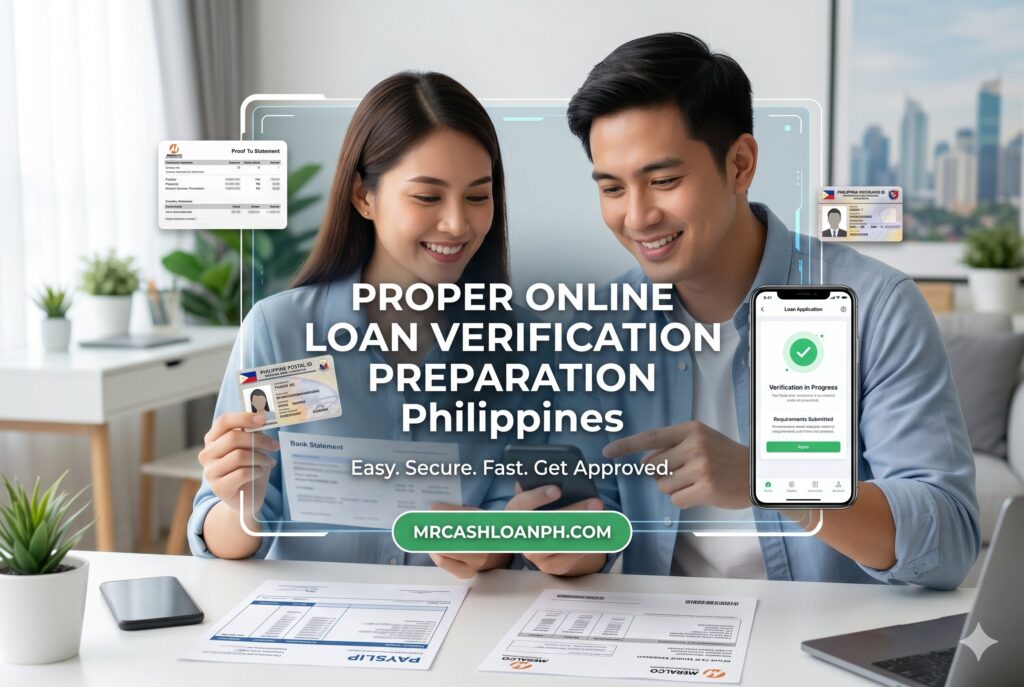
Applicant preparing clear ID photos and employment documents for online lending verification
Freelancers and self-employed applicants should prepare:
- GCash or Maya transaction history
- Bank statements
- Invoice records
- Platform payout screenshots
- Business permits if available
Step 3: Reduce Application Frequency
Avoid submitting applications to many lenders within the same day.
Instead:
- Correct errors first
- Wait several days before reapplying
- Improve income documentation
- Settle overdue balances if possible
- Use consistent borrower information
This reduces fraud-related risk indicators.
Step 4: Strengthen Financial Credibility
Lenders prefer borrowers showing:
- Stable income flow
- Consistent e-wallet activity
- Reliable employment history
- Responsible repayment behavior
Even informal workers can improve approval odds through financial consistency.
Borrowers often underestimate how much digital cash-flow behavior influences approval systems.
Borrower Mistakes That Trigger Automatic Rejection
| Borrower Action | Possible System Interpretation |
|---|---|
| Uploading edited documents | Fraud risk |
| Applying to many apps quickly | Financial distress |
| Using inconsistent addresses | Identity mismatch |
| Missing verification calls | Unverified borrower |
| Inflated salary declarations | Income inconsistency |
| Reusing blurry IDs | Failed OCR verification |
| Shared bank account usage | Ownership concerns |
| Frequent SIM changes | Contact instability |
Why Stable Digital Behavior Matters More Than Ever 📱
Philippine fintech lending increasingly depends on digital trust signals.
Lenders may indirectly assess:
- E-wallet usage consistency
- Mobile number longevity
- Device reputation
- Payment behavior
- Transaction frequency
This shift became stronger as online lending platforms expanded remote onboarding and automated approval systems.
Borrowers with stable digital habits generally perform better during automated assessment.
How Verification Teams Actually Review Applications
Automated Review Comes First
Before human review, most systems run automated checks for:
- Identity validity
- Duplicate accounts
- Fraud indicators
- Existing loan exposure
- Contact verification
- Credit behavior patterns
Applications failing early-stage filters may never reach manual evaluation.
Human Review Usually Focuses on Risk Signals
Verification teams commonly investigate:
- Suspicious income claims
- Employer legitimacy
- Borrower responsiveness
- Inconsistent explanations
- Device irregularities
Applicants who answer calls confidently and provide consistent information tend to pass verification more smoothly.
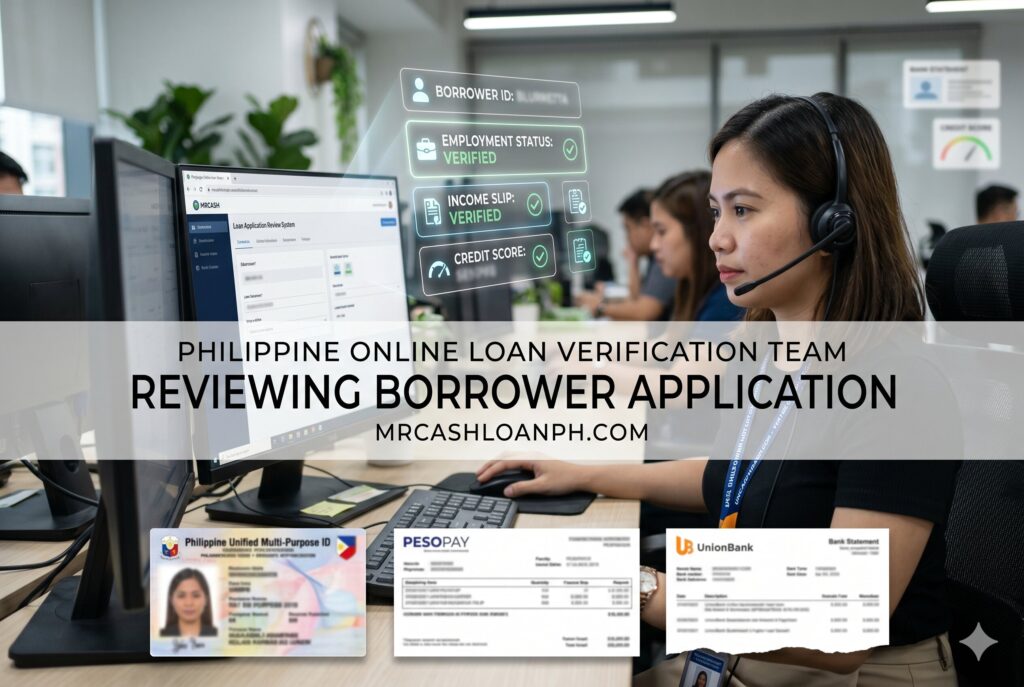
Verification officers reviewing borrower data for online loan approval in the Philippines
Why Borrowers With Stable Income Still Get Rejected
Income Alone Is Not Enough
Some employed borrowers assume salary automatically guarantees approval.
However, lenders also analyze:
- Existing obligations
- Spending patterns
- Payment reliability
- Banking consistency
- Employment duration
A high salary with excessive debt may still produce rejection.
Employer Reputation Can Affect Assessment
Some lenders internally categorize employment sectors based on repayment performance trends.
Applicants from unstable industries, short-term contracts, or inconsistent freelance work may face tighter scoring thresholds.
This does not mean discrimination. It reflects repayment risk modeling used across digital finance systems.
Can Incomplete Information Affect Approval?
Yes. Incomplete information is one of the fastest ways to trigger automatic rejection.
Missing details create verification uncertainty.
Examples include:
- Incomplete addresses
- Missing employer details
- Partial income information
- Incorrect emergency contacts
- Unfinished selfie verification
Digital lenders prefer complete, verifiable applications because incomplete data increases fraud exposure.
Can Multiple Applications Hurt Approval Chances?
Yes – especially when submitted within a short timeframe.
Lenders may interpret rapid applications as:
- Urgent financial distress
- Loan stacking attempts
- High repayment risk
Borrowers improve approval chances by focusing on one properly prepared application instead of mass submissions.
How Long Should You Wait Before Reapplying?
There is no universal waiting period because each lender uses different risk models.
However, borrowers commonly benefit from waiting several days or weeks if:
- Verification failed
- Data inconsistencies exist
- Previous applications were rejected repeatedly
Reapplying immediately without corrections often produces identical results.
Can You Apply Again After Rejection?
Yes. Rejection is not always permanent.
Many borrowers eventually qualify after correcting:
- Identity verification issues
- Employment inconsistencies
- Poor document quality
- Delinquent balances
- Contact verification failures
Some applicants succeed on their second or third attempt because they improve application accuracy and stabilize financial behavior beforehand.
Practical Fixes That Improve Approval Probability 💡
For Employed Applicants
Prepare:
- Updated company ID
- Active payroll account
- Accurate HR contact information
- Consistent payslips
Avoid using unofficial employer references.
For Freelancers and Gig Workers
Provide:
- Stable e-wallet records
- Client payment history
- Platform payout screenshots
- Bank inflow consistency
Irregular income is acceptable if patterns remain traceable.
For Previously Rejected Borrowers
Focus on:
- Clearing overdue loans
- Improving document quality
- Reducing simultaneous applications
- Maintaining one active mobile number
- Using accurate personal details consistently
Borrower Education Matters More Than Speed
Many applicants rush applications because they urgently need funds.
But rushed submissions create:
- Typographical errors
- Verification mismatches
- Missing documents
- Fraud-related flags
Responsible borrowers treat digital lending applications like formal financial transactions, not instant cash shortcuts.
That mindset alone significantly improves approval outcomes.
FAQs About Quick Loan Rejection Philippines
Why was my online loan denied?
Common reasons include incomplete information, failed ID verification, unstable income, high debt exposure, inconsistent application details, or fraud-detection triggers.
Can I apply again after rejection?
Yes. Many borrowers get approved after correcting verification issues, improving document quality, or stabilizing their financial profile before reapplying.
Does incomplete information affect approval?
Yes. Missing or inconsistent details reduce verification confidence and may trigger automatic rejection by digital lending systems.
How long should I wait before reapplying?
Borrowers often benefit from waiting several days or weeks, especially if previous applications failed because of verification issues or inconsistent information.
Can multiple applications hurt approval chances?
Yes. Applying to many lenders rapidly may signal financial distress or loan stacking behavior, reducing approval probability.
Conclusion
Quick loan rejection Philippines cases are often linked to operational and verification issues rather than permanent financial disqualification. Digital lenders now rely heavily on automated scoring systems, fraud-detection tools, identity verification checks, and behavioral risk analysis before approving borrowers.
Applicants improve their approval chances by submitting accurate information, using clear IDs, maintaining stable digital financial activity, answering verification calls properly, and avoiding repeated applications across multiple lending apps. Responsible borrowing behavior, realistic income declarations, and consistent borrower data matter far more than many applicants realize.
Preparing carefully before reapplying can significantly improve verification confidence and reduce avoidable rejection triggers.
Last Updated on September 15, 2026 by David Vargas
