
Getting approved for a loan after late payments, rejected applications, or weak credit history can feel frustrating. Many Filipino borrowers assume bad credit automatically means permanent rejection, but that is not how most modern digital lenders operate. Today’s fintech lenders use multiple verification layers beyond traditional credit scoring, including income consistency, repayment behavior, device trust signals, e-wallet activity, and alternative financial data.
Some online lenders in the Philippines still approve applicants with low credit scores if borrowers present lower risk indicators during application review. Improving approval odds often involves correcting application inconsistencies, reducing simultaneous loan submissions, preparing valid income proof, maintaining stable mobile activity, and choosing lenders with alternative credit assessment systems. Borrowers who understand how lender risk evaluation works usually make stronger applications and avoid repeated denials.
Why Bad Credit Does Not Always Mean Automatic Rejection
Many borrowers confuse “bad credit” with being permanently blacklisted. In reality, digital lending systems evaluate multiple layers of borrower behavior before issuing approvals.
Some online lenders focus heavily on repayment history from the Credit Information Corporation (CIC), while others prioritize:
- Active income flow
- Mobile wallet usage
- Employment stability
- Device consistency
- Banking activity
- Existing debt load
- Identity verification quality
- Repayment patterns on smaller loans
This matters because many Filipinos have thin or incomplete formal credit histories rather than deeply damaged credit profiles.
A freelance graphic designer with irregular income may still qualify despite limited CIC data. Meanwhile, a salaried employee with multiple unpaid lending app balances may face stricter scrutiny.
Modern fintech risk models are more nuanced than many borrowers realize.
Summary:
Borrowers searching for “quick loan bad credit Philippines” can still improve approval opportunities by focusing on lender-compatible verification practices. Online lenders often evaluate more than CIC records, including income consistency, repayment behavior, e-wallet activity, employer verification, device stability, and identity matching. Applicants with late payments, rejected applications, or limited credit history may improve their chances by correcting application errors, reducing active debt, preparing valid documents, and applying only with lenders that use alternative credit assessment systems. Responsible repayment behavior remains one of the strongest ways to rebuild financial trust and improve future online loan eligibility in the Philippines.
📌 How Online Lenders Evaluate Bad Credit Borrowers
Traditional banks often reject borrowers based mainly on formal credit scoring. Digital lenders operate differently because they process large application volumes using automated risk systems.
Alternative Credit Assessment Is Now Common
Many Philippine lending apps use alternative credit assessment methods when evaluating borrowers with poor credit or limited credit records.
These systems may analyze:
- E-wallet transaction frequency
- Salary deposit consistency
- SIM card longevity
- Device reputation
- Utility bill patterns
- Digital payment behavior
- Geolocation consistency
- Borrower repayment habits from prior loans
This is especially important for:
- Freelancers
- Online sellers
- Delivery riders
- Gig workers
- Self-employed applicants
- First-time borrowers
Someone without a credit card may still qualify if their financial activity appears stable and verifiable.
Soft Credit Checks vs Hard Credit Evaluation
Not all online loan applications trigger aggressive credit investigations.
Some lenders perform soft credit checks first, meaning they review borrower risk indicators without heavily impacting future applications.
Others directly access CIC-linked repayment records or third-party lending databases.
Borrowers with:
- Overdue digital loans
- Multiple unpaid balances
- Recent defaults
- Identity inconsistencies
usually trigger higher-risk classifications inside automated approval systems.
That does not always result in rejection, but it may reduce:
- Loan amount
- Approval speed
- Repayment flexibility
Can I Get Approved With Bad Credit?
Yes, approval is still possible, but expectations should remain realistic.
Borrowers with bad credit typically receive higher scrutiny during:
- KYC verification
- Employment checks
- Income validation
- Fraud screening
- Device trust analysis
Approval becomes more likely when borrowers can show:
- Stable income
- Active mobile number ownership
- Consistent application details
- Valid government IDs
- Recent proof of earnings
- Lower active debt exposure
Lenders usually prefer borrowers who demonstrate repayment capability today rather than applicants relying only on past credit history.
🔍 Why Online Loan Applications Get Rejected So Often
Many borrowers assume rejection happens only because of low credit scores. In practice, digital lenders reject applications for many operational reasons.
This is why borrowers researching why online loan applications get rejected often uncover issues unrelated to CIC records.
Inconsistent Application Information
Automated lending systems flag mismatched information quickly.
Common triggers include:
- Different names across IDs
- Incorrect birthdays
- Inconsistent addresses
- Employer verification failures
- Invalid contact numbers
- Disposable email addresses
Even small inconsistencies can reduce lender confidence.
Too Many Simultaneous Loan Applications
Submitting applications to many lending apps within a short period creates a high-risk signal.
Risk engines may interpret this behavior as:
- Financial distress
- Loan stacking attempts
- Fraud exposure
- Repayment instability
Borrowers denied by one lender often immediately apply to ten more apps. This usually worsens approval probability.
Existing Overdue Loans
Unpaid balances remain one of the strongest rejection triggers.
Some lenders now cross-reference:
- Internal repayment databases
- Collection partner records
- CIC data
- Shared fintech risk systems
Late repayment behavior matters because lenders prioritize future repayment probability above all else.
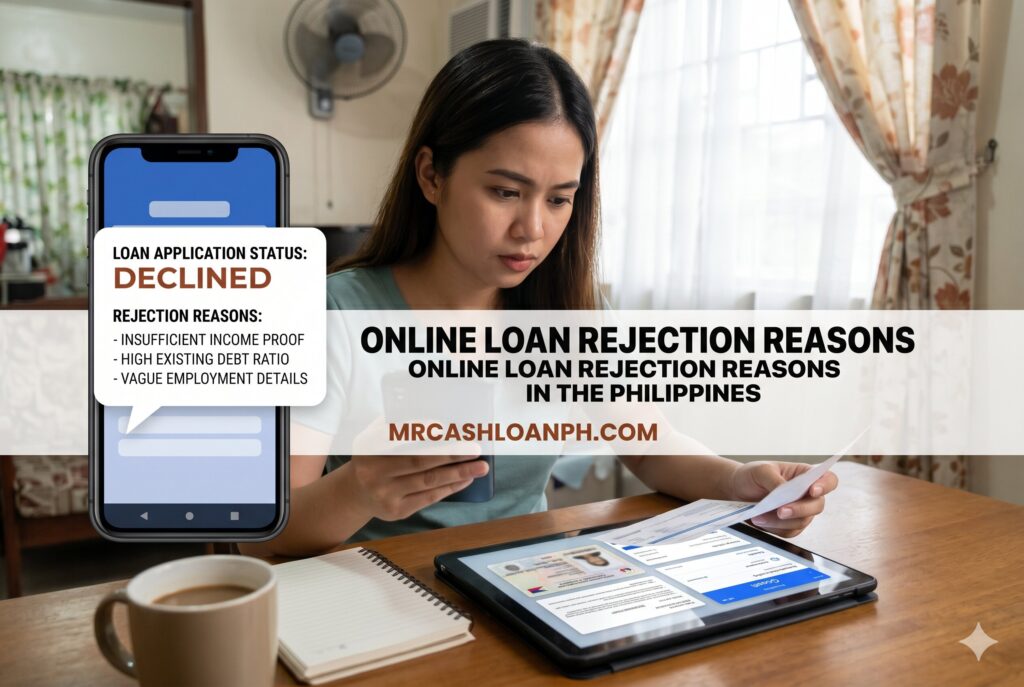
Filipino borrower checking loan rejection reasons and online lending application errors on mobile phone
🛠️ Approval Strategies That Improve Your Chances
Borrowers with poor credit can still strengthen their applications significantly before reapplying.
Apply Only to Lenders Matching Your Risk Profile
Not every lender targets the same borrower segment.
Some lenders specialize in:
- First-time borrowers
- Salary earners
- Self-employed applicants
- E-wallet users
- Low-ticket emergency loans
Applying to lenders incompatible with your profile increases rejection risk.
For example:
- Freelancers may perform better with lenders accepting alternative income proof
- Gig workers may need platforms tolerant of variable monthly earnings
- Borrowers rebuilding credit may qualify first for smaller loan limits
Improve Your Financial Visibility
Lenders trust borrowers who appear financially organized.
Before applying:
- Update valid IDs
- Ensure mobile numbers remain active
- Prepare proof of income
- Keep e-wallet accounts active
- Avoid suspicious app permissions or rooted devices
- Maintain accurate contact details
Even digital behavior patterns can influence automated scoring systems.
Reduce Active Debt Before Reapplying
Borrowers often focus only on approval instead of debt exposure.
Paying down smaller overdue balances can:
- Lower risk scores
- Improve repayment credibility
- Increase lender confidence
- Improve future borrowing options
Some lenders reassess applicants differently once active debt obligations decrease.
Build Small Positive Repayment Records
Many borrowers attempt large loans immediately after prior rejection.
A more effective strategy is:
- Start with smaller loans
- Repay early or on time
- Build positive repayment patterns
- Gradually increase borrowing credibility
Repayment behavior remains one of the strongest indicators inside fintech risk models.
Which Lenders Accept Low Credit Borrowers?
There is no universal “guaranteed approval” lender.
However, some digital lenders are more flexible because they:
- Use alternative verification methods
- Focus on cash flow rather than formal credit scores
- Offer smaller starter loans
- Evaluate repayment capacity dynamically
Borrowers searching for quick loan online Philippines options should focus on:
- SEC-registered lending platforms
- Transparent repayment terms
- Clear privacy policies
- Reasonable collection practices
- Visible customer support channels
Avoid platforms promising:
- Guaranteed approval
- No verification at all
- Instant high-limit loans regardless of debt history
These are common red flags associated with predatory lending behavior.
📱 How Lending Apps Evaluate Borrower Risk Behind the Scenes
Modern lending apps operate using layered automated risk systems.
Device and Identity Trust Signals
Fintech lenders frequently analyze:
- Device consistency
- SIM ownership duration
- Login behavior
- GPS consistency
- Application patterns
- Identity verification success
Borrowers changing devices repeatedly or submitting inconsistent identity data may trigger fraud alerts.
Employment and Income Stability Checks
Even without formal payslips, lenders still attempt to assess repayment stability.
Self-employed borrowers may use:
- Bank transaction history
- E-wallet inflows
- Online selling records
- Client invoices
- Remittance patterns
Meanwhile, salaried employees often undergo:
- Employer verification
- Payroll consistency checks
- Work tenure review
This explains why applicants with stable income sometimes receive approval despite weak credit history.
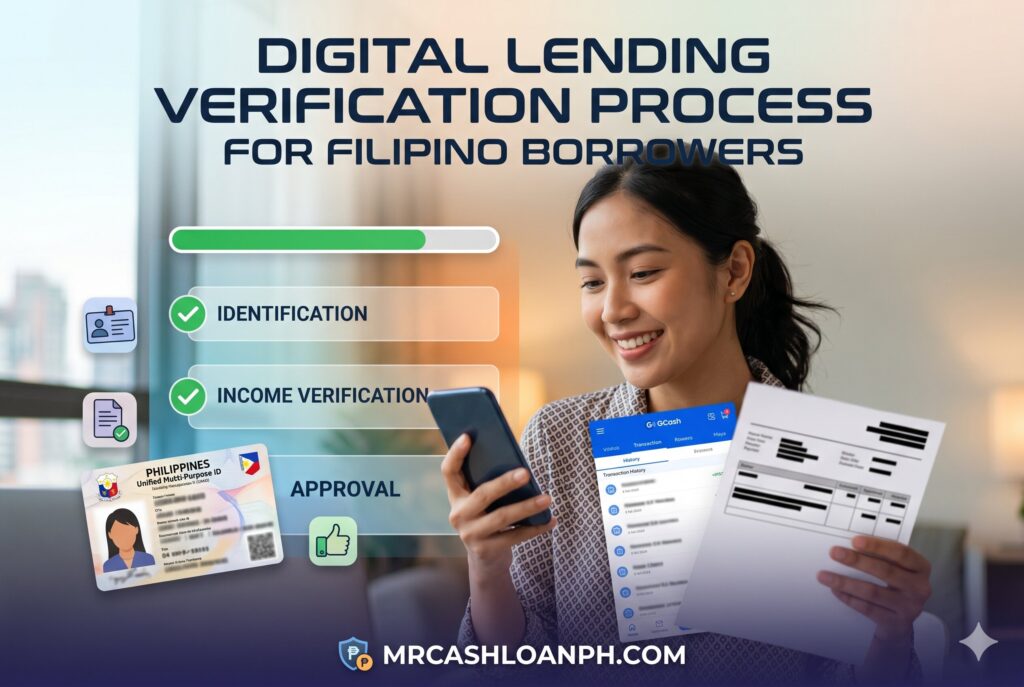
Online loan verification process showing ID checks income validation and mobile risk assessment
Do Online Loans Check CIC Records?
Some do, while others rely more heavily on internal scoring systems.
The Credit Information Corporation (CIC) serves as the Philippines’ central credit registry, but not all fintech lenders evaluate borrowers identically.
Lenders may:
- Check formal CIC data
- Review prior app repayment history
- Analyze partner lending databases
- Use proprietary scoring models
Borrowers with poor CIC records may still qualify if:
- Current income is stable
- Existing debts are manageable
- Repayment behavior has recently improved
However, severe defaults or ongoing unpaid obligations remain major risk indicators.
💡 Borrowers With No Formal Credit History Face Different Challenges
A borrower with “no credit” differs from a borrower with “bad credit.”
Many freelancers and self-employed Filipinos lack:
- Credit cards
- Bank loans
- Installment history
This creates a “thin-file borrower” situation.
In these cases, lenders often rely more heavily on:
- Cash flow analysis
- Digital payment activity
- E-wallet transactions
- Income regularity
- Identity consistency
Alternative credit assessment systems became more common precisely because many Filipinos remain outside traditional banking systems.
How Can I Improve Approval Chances Quickly?
Improvement does not always require months of waiting.
Some practical actions can strengthen applications relatively fast.
Fix Verification Weaknesses First
Before reapplying:
- Update expired IDs
- Use consistent personal details
- Remove inactive contact references
- Ensure selfies match IDs clearly
- Avoid blurry uploads
KYC failures are extremely common in online lending.
Avoid Aggressive Borrowing Behavior
Risk systems often detect:
- Multiple applications within hours
- Frequent account creation
- Loan stacking behavior
- Device switching patterns
Spacing applications responsibly may improve approval odds.
Show Stable Cash Activity
Consistent incoming funds matter.
Lenders often respond positively to:
- Regular salary deposits
- Active e-wallet transactions
- Business inflows
- Consistent remittance activity
Financial stability signals can partially offset weak credit profiles.
⚠️ Late Payments Continue Affecting Future Applications
Borrowers frequently underestimate how long repayment behavior influences future approvals.
Late payments can affect:
- Future loan eligibility
- Loan limits
- Interest rates
- Verification intensity
- Approval speed
Some lenders downgrade repeat late payers automatically inside internal scoring systems.
Rebuilding Financial Trust Takes Time
Trust rebuilding usually happens gradually through:
- Consistent repayments
- Reduced overdue balances
- Responsible borrowing frequency
- Lower debt utilization
Borrowers rebuilding credit should prioritize repayment discipline over frequent borrowing.
Practical Borrower Preparation Before Applying Again
Applicants with previous rejections often improve outcomes when they prepare carefully instead of rushing into new applications.
Prepare These Documents Ahead of Time
Borrowers applying for requirements for quick online loans typically need:
| Requirement | Why Lenders Need It |
|---|---|
| Valid government ID | Identity verification |
| Mobile number | OTP and fraud checks |
| Proof of income | Repayment evaluation |
| Selfie verification | KYC compliance |
| Active e-wallet or bank account | Loan disbursement |
| Employment details | Income consistency review |
Freelancers and self-employed applicants may additionally prepare:
- Client invoices
- Transaction screenshots
- Online store records
- Digital wallet statements
Improve Application Quality
Applications perform better when borrowers:
- Complete forms accurately
- Avoid rushed submissions
- Upload clear documents
- Maintain stable internet connection
- Use personal devices consistently
Operational details matter more than many applicants realize.
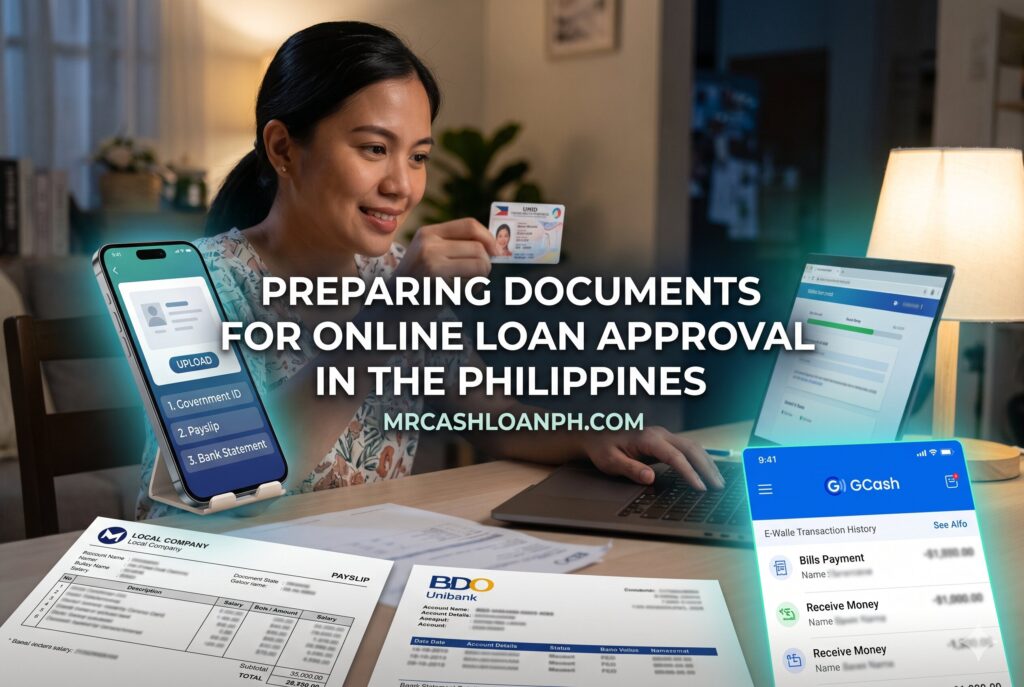
Filipino applicant preparing valid IDs proof of income and e-wallet account for online loan application
📌 Same Day Approval Does Not Mean Risk-Free Borrowing
Many borrowers searching for same day cash loan online solutions prioritize speed over sustainability.
Fast approvals can help during emergencies, but borrowers should still evaluate:
- Repayment terms
- Total borrowing cost
- Penalty structures
- Collection behavior
- Privacy policies
Responsible lenders explain repayment obligations clearly before disbursement.
Avoid borrowing purely to cover another unpaid digital loan unless repayment planning is realistic.
Emotional Stress After Loan Rejection Is Real
Repeated rejection creates emotional pressure for many borrowers.
Common reactions include:
- Panic applications
- Borrowing from unsafe lenders
- Ignoring repayment capacity
- Hiding debt problems
- Applying using inaccurate information
These actions usually worsen long-term financial stability.
Borrowers rebuilding financial trust benefit more from:
- Smaller manageable obligations
- Consistent repayment habits
- Lower debt exposure
- Realistic loan expectations
Responsible borrowing behavior improves both financial health and future approval opportunities.
FAQs About Quick Loan Bad Credit Philippines
Can I get approved with bad credit?
Yes. Some online lenders use alternative credit assessment methods beyond traditional credit scores. Stable income, valid documents, consistent mobile activity, and lower debt exposure may improve approval chances.
Which lenders accept low credit borrowers?
Some SEC-registered digital lenders accommodate borrowers with limited or weak credit history through smaller starter loans and alternative verification systems. Approval still depends on risk evaluation and repayment capacity.
Do online loans check CIC records?
Some lenders check CIC data directly, while others rely more on internal fintech scoring systems, repayment history, and alternative borrower verification methods.
How can I improve approval chances?
You can improve approval opportunities by correcting application inconsistencies, reducing overdue balances, preparing valid income proof, and avoiding multiple simultaneous applications.
Will late payments affect future applications?
Yes. Late repayments can reduce future loan eligibility, lower approved amounts, and trigger stricter lender verification reviews.
Conclusion
Bad credit does not automatically remove every borrowing opportunity in the Philippines, but it does require a more strategic and responsible approach. Modern digital lenders evaluate borrowers through layered risk systems that include income stability, repayment behavior, identity verification quality, and financial consistency beyond traditional credit scoring alone.
Borrowers who prepare accurate documents, reduce active debt, avoid aggressive reapplications, and build positive repayment habits usually improve their long-term approval potential. Instead of chasing unrealistic guaranteed approvals, focus on rebuilding financial trust gradually and borrowing only within manageable repayment capacity. Responsible borrowing behavior remains the strongest foundation for safer and more sustainable access to online loans.
Last Updated on September 13, 2026 by David Vargas
