
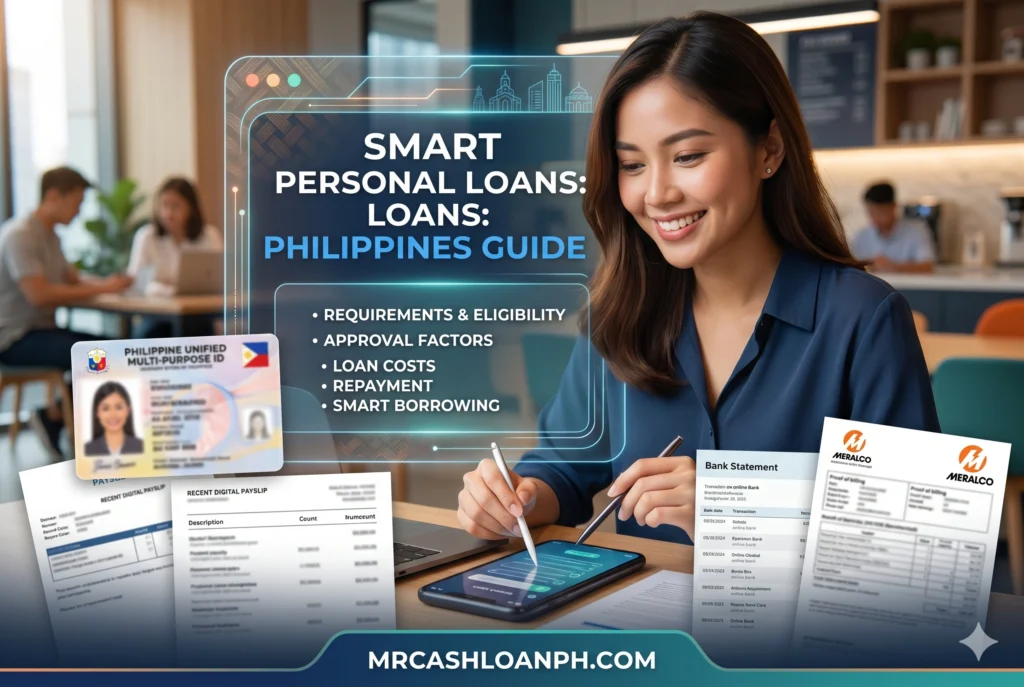
Personal loans have become one of the most accessible financing options in the Philippines. Whether you need funds for medical expenses, education, debt consolidation, home improvements, business support, or emergency situations, a personal loan can provide relatively fast access to cash without requiring collateral.
However, many borrowers focus only on approval and loan amount while overlooking the broader lending ecosystem. Approval decisions, verification processes, repayment obligations, credit reporting, regulatory protections, and borrowing costs all influence the long-term outcome of a loan.
This pillar resource explains how personal loans work in the Philippines, what lenders evaluate, the costs involved, common borrower mistakes, and how to assess your readiness before submitting an application.
Personal Loan Philippines at a Glance
| Topic | Key Takeaway |
|---|---|
| Loan Type | Usually unsecured and collateral-free |
| Common Uses | Emergencies, education, home expenses, debt consolidation |
| Typical Requirements | Valid ID, proof of income, contact information |
| Approval Factors | Income stability, repayment capacity, credit behavior |
| Verification Methods | KYC, identity checks, OTP verification, document validation |
| Loan Costs | Interest, processing fees, penalties, taxes where applicable |
| Repayment Structure | Fixed monthly installments through amortization |
| Credit Impact | Repayment behavior may influence future borrowing opportunities |
| Borrower Protection | Covered by Philippine consumer protection and lending regulations |
| Best Practice | Borrow only what can comfortably fit your monthly budget |
Summary
A personal loan Philippines product allows qualified borrowers to access funds without providing collateral. Approval depends on factors such as income stability, existing obligations, identity verification, and overall creditworthiness. Most lenders require valid identification, proof of income, and successful completion of KYC procedures. Costs may include interest charges, processing fees, and late-payment penalties. Responsible borrowing involves assessing repayment capacity, reviewing loan costs, understanding verification requirements, and ensuring the loan serves a genuine financial purpose rather than creating additional debt pressure.
What Is a Personal Loan?
A personal loan is a financing product that provides a lump sum amount which the borrower repays through scheduled installments over an agreed period.
Unlike housing loans or auto loans, personal loans are generally flexible in purpose. Lenders typically allow funds to be used for:
- Medical expenses
- Education costs
- Home improvements
- Debt consolidation
- Family emergencies
- Small business cash flow needs
- Travel or major purchases
Most personal loans offered by banks, digital banks, and licensed lending companies in the Philippines are unsecured, meaning borrowers are not required to pledge property or assets as collateral.
Why Personal Loans Remain Popular in the Philippines
Several developments have made borrowing more accessible in recent years:
Mobile-First Loan Applications
Many lenders now support:
- Smartphone applications
- Online document uploads
- Electronic signatures
- Digital onboarding
Modern lending platforms increasingly use electronic identity verification systems that reduce the need for branch visits.
Faster Verification Systems
Current lending workflows commonly use:
- Selfie verification
- Government ID validation
- OTP authentication
- Device security checks
- Automated document review
These technologies help lenders reduce fraud while accelerating legitimate applications.
Who Can Apply for a Personal Loan?
Eligibility varies between lenders, but most applicants fall into one of several categories.
Salaried Employees
Employees generally present:
- Government-issued ID
- Payslips
- Certificate of Employment
- Tax documents when requested
Stable employment history often strengthens applications.
Self-Employed Individuals
Business owners may be asked to provide:
- Business registration documents
- Financial statements
- Tax returns
- Bank statements
Income consistency frequently matters more than business size.
Freelancers and Gig Workers
Modern lenders increasingly accommodate:
- Online freelancers
- Delivery riders
- Content creators
- Remote workers
Instead of traditional employment documents, lenders may review:
- Platform earnings
- Bank transaction histories
- Digital wallet records
- Client payment records
This reflects the growing digital economy in the Philippines.
Personal Loan Requirements Philippines
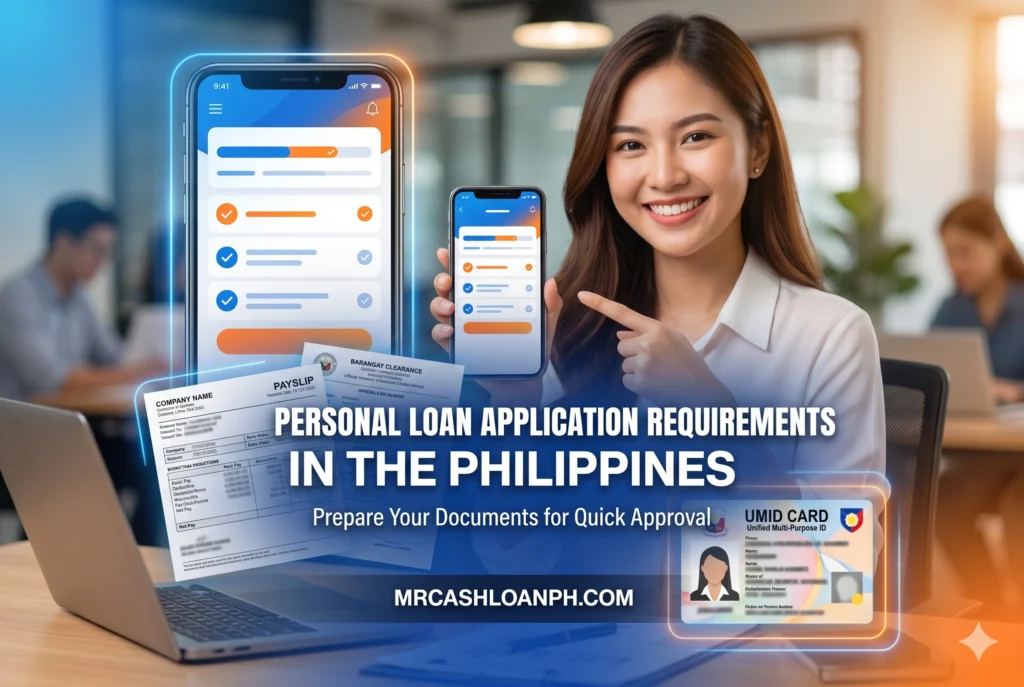
Many borrowers search specifically for personal loan requirements philippines because requirements vary significantly between institutions.
Most lenders typically request:
Identity Verification Documents
- Philippine National ID
- Passport
- Driver’s License
- UMID or other accepted IDs
Identity verification is part of Know Your Customer (KYC) compliance requirements.
Income Verification
Depending on employment type:
- Payslips
- Certificate of Employment
- Income Tax Return
- Business documents
- Bank statements
Contact and Residence Information
Applicants are commonly required to provide:
- Mobile number
- Email address
- Residential address
- Emergency contact details
Banking or Disbursement Information
Approved funds are typically sent through:
- Bank accounts
- Digital bank accounts
- E-wallet-linked systems
- Other lender-supported channels
How Loan Approval Decisions Are Made 🏦
Many borrowers assume approval depends solely on income. In reality, lenders assess multiple risk indicators.
This topic is closely related to how loan approval decisions are made.
Income Stability
Lenders want evidence that repayment can continue throughout the loan term.
They often evaluate:
- Length of employment
- Industry stability
- Business consistency
- Income regularity
Existing Financial Obligations
Approval decisions may consider:
- Existing loans
- Credit card balances
- Monthly obligations
- Debt-to-income relationship
Identity Confidence
A lender must be confident that the applicant is genuine.
Common verification checks include:
- ID authenticity review
- Selfie matching
- Contact verification
- Device verification
Creditworthiness
Creditworthiness refers to the likelihood that a borrower will repay obligations responsibly.
Many lenders evaluate available credit information when permitted and authorized by the borrower. Credit data contributes to broader risk assessment rather than serving as the sole decision factor.
What Affects Personal Loan Approval?
Positive Signals
Factors that often improve approval probability include:
- Stable income
- Complete documentation
- Consistent employment
- Strong repayment history
- Accurate application details
Negative Signals
Factors that may increase lending risk include:
- Inconsistent information
- Unverifiable income
- Identity concerns
- High existing debt obligations
- Repeated application submissions within short periods
An overlooked issue is data inconsistency. A mismatch between ID information, income records, contact details, and submitted documents frequently creates verification delays.
Why Personal Loans Get Rejected
Borrowers often search for why personal loans get rejected after receiving a denial.
Common causes include:
Insufficient Repayment Capacity
Income may not support the requested loan amount.
Verification Failures
Examples include:
- Unclear ID images
- Failed selfie verification
- Inconsistent personal information
- Invalid contact details
Incomplete Documentation
Missing requirements can prevent underwriting teams from completing evaluations.
Risk-Based Lending Decisions
Even when all documents are submitted correctly, lenders may determine that risk exceeds their lending criteria.
A rejection does not necessarily indicate poor financial behavior. It simply means the application did not meet the institution’s current risk thresholds.
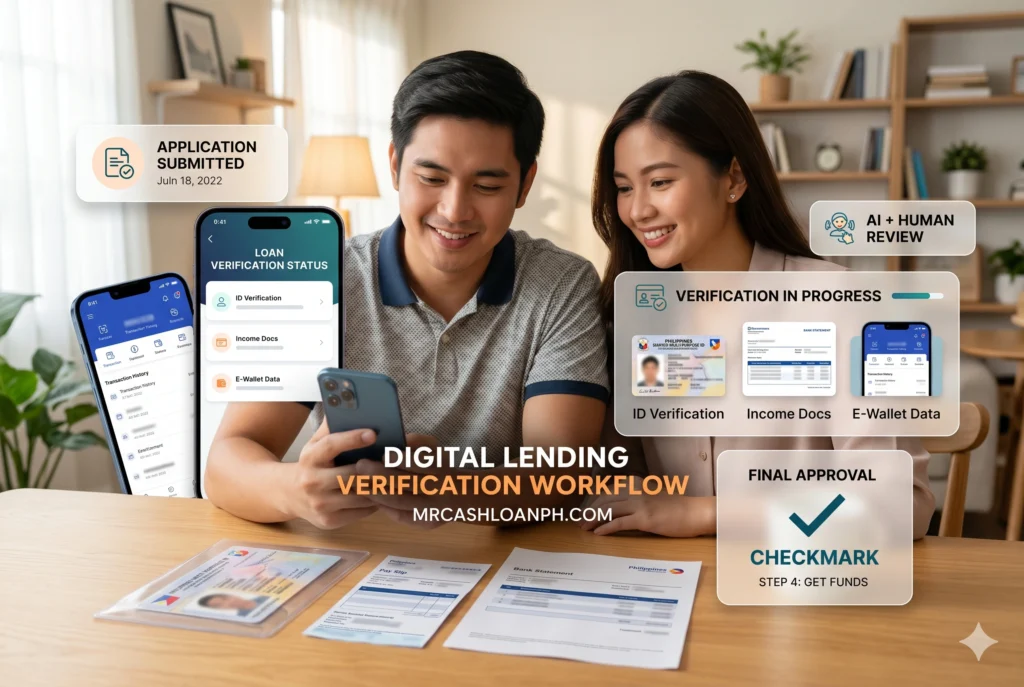
The Personal Loan Verification Process
The personal loan verification process has become increasingly sophisticated.
Identity Verification
Modern systems may review:
- Facial matching
- Government IDs
- Selfie authenticity
- Duplicate account detection
Contact Verification
Lenders may verify:
- Mobile numbers
- Email addresses
- Residence information
Employment or Income Verification
This can involve:
- Employer confirmation
- Document validation
- Banking activity review
Fraud Prevention Controls
Many institutions now utilize:
- Device fingerprinting
- Behavioral analysis
- Risk scoring models
- Suspicious activity detection
These measures help protect both lenders and legitimate borrowers.
Personal Loan Interest Rates Explained
One of the most important borrowing topics is personal loan interest rates explained.
Interest Is Not the Only Cost
Borrowers should evaluate:
- Interest charges
- Processing fees
- Service fees
- Late payment penalties
Loan Cost Comparison Matters
A loan with a lower advertised rate may still become more expensive when additional fees are considered.
Longer Terms Can Increase Total Cost
Lower monthly payments often sound attractive.
However:
- Longer repayment periods may increase total interest paid.
- Shorter terms may reduce overall borrowing cost.
Always evaluate both:
- Monthly installment
- Total repayment amount
How Repayments Are Calculated
Most lenders use structured repayment schedules.
What Is an Amortization Schedule?
An amortization schedule shows:
- Monthly payment amount
- Principal reduction
- Interest portion
- Remaining balance
Example
Suppose a borrower receives:
- Loan amount: ₱100,000
- Fixed repayment term: 24 months
Each monthly installment generally includes:
- Principal repayment
- Interest charge
Over time, the outstanding balance gradually decreases until the loan is fully paid.
How Much Can You Borrow?
There is no universal loan amount.
Loan size depends on:
- Income level
- Existing obligations
- Internal lender policies
- Risk assessment results
Some institutions may approve amounts tied to income multiples, while others apply proprietary risk models.
The highest advertised amount is not automatically available to every applicant.
Responsible Borrowing Before You Apply
Before submitting an application, ask yourself:
Is the Loan Necessary?
A personal loan works best when funding:
- Essential needs
- Productive expenses
- Financial consolidation goals
Can the Monthly Payment Fit Your Budget?
A practical approach is to calculate:
- Income after taxes
- Existing obligations
- Emergency savings needs
Only then estimate a comfortable repayment amount.
Do You Have a Backup Plan?
Unexpected events may affect income.
Responsible borrowers consider:
- Emergency funds
- Alternative income sources
- Insurance coverage where applicable
Common Borrower Mistakes ⚠️
Applying to Too Many Lenders Simultaneously
Submitting numerous applications within a short period can create additional scrutiny.
Borrowing Based on Approval Rather Than Need
Approval does not automatically mean the amount is appropriate.
Ignoring Total Loan Cost
Many borrowers focus only on monthly payments.
Total repayment cost often provides a clearer financial picture.
Overlooking Loan Terms
Important details include:
- Due dates
- Penalty rules
- Grace periods
- Payment channels
Personal Loan Repayment Problems and How to Respond
Borrowers occasionally encounter personal loan repayment problems.
When Financial Difficulty Appears
Take action early rather than waiting for missed payments.
Potential steps include:
- Contacting the lender
- Discussing available options
- Reviewing budget adjustments
Why Early Communication Matters
Lenders are generally more receptive when borrowers communicate before accounts become severely delinquent.
Ignoring payment difficulties rarely improves outcomes.
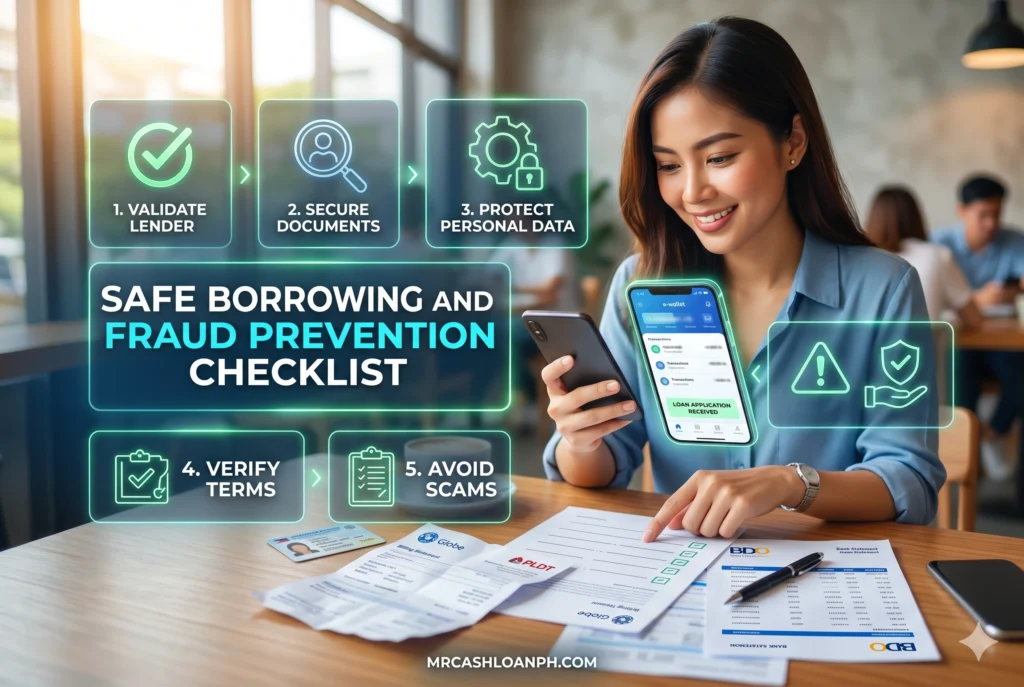
Personal Loan Scams Philippines: Warning Signs
Financial scams continue to evolve, making borrower awareness essential.
The topic of personal loan scams philippines deserves careful attention.
Red Flags
Be cautious when a lender:
- Guarantees approval
- Requests advance fees before verification
- Asks for passwords or OTPs
- Uses suspicious communication channels
Never Share OTP Codes
OTP codes are security credentials.
Legitimate institutions use them for authentication and verification purposes. Borrowers should never disclose OTPs to unauthorized individuals.
Verify Regulatory Status
Borrow only from properly regulated and licensed institutions.
Consumer protection frameworks exist to support safer lending practices.
Quick Self-Assessment Before Applying
Use this checklist:
✅ Stable income source
✅ Valid government-issued ID
✅ Accurate personal information
✅ Realistic repayment budget
✅ Clear borrowing purpose
✅ Emergency financial cushion
✅ Complete supporting documents
If most boxes are checked, you may be better prepared for the application process.
Frequently Asked Questions
What is a personal loan?
A personal loan is a financing product that provides funds which are repaid through scheduled installments over a specified period.
How much can I borrow?
The approved amount depends on lender policies, income, repayment capacity, and risk evaluation.
What affects approval?
Income stability, documentation quality, identity verification results, existing obligations, and overall creditworthiness commonly influence approval decisions.
How are repayments calculated?
Repayments are generally structured through an amortization schedule that combines principal and interest across fixed monthly installments.
What documents are needed?
Most lenders require a valid government-issued ID, proof of income, contact information, and other documents depending on employment type.
Conclusion
A personal loan Philippines product can be a valuable financial tool when used responsibly. The strongest applications typically combine verified identity information, stable income, realistic borrowing needs, and a repayment plan that fits comfortably within the borrower’s budget.
Before applying, focus on preparation rather than speed. Review requirements carefully, understand loan costs beyond the advertised rate, verify lender legitimacy, and assess your repayment capacity honestly. Borrowers who approach lending decisions with clear expectations and financial discipline are generally better positioned to benefit from credit while avoiding long-term debt stress.
References
- Bangko Sentral ng Pilipinas
Organization: BSP
Resource: Consumer Protection and Financial Supervision Resources
URL: https://www.bsp.gov.ph - Credit Information Corporation
Organization: CIC
Resource: About Your CIC Credit Report
URL: https://www.creditinfo.gov.ph/about-your-cic-credit-report - Credit Information Corporation
Organization: CIC
Resource: Implementing Rules and Regulations of the Credit Information System Act (RA 9510)
URL: https://www.creditinfo.gov.ph/implementing-rules-and-regulation-credit-information-system-act-cisa-republic-act-no-9510 - Bank of the Philippine Islands
Organization: BPI
Resource: Personal Loan Requirements
URL: https://www.bpi.com.ph/personalloan/regular/requirements - Bank of the Philippine Islands
Organization: BPI
Resource: Personal Loan FAQs
URL: https://www.bpi.com.ph/content/bpi/ph/en/personal/loans/personal-loan/new-applicants-faqs.html - Bank of the Philippine Islands
Organization: BPI
Resource: Personal Loan Product Information
URL: https://www.bpi.com.ph/personal/loans/personal-loan/regular-loan
Community & User Experience Sources
- Reddit – DigitalbanksPH
URL: https://www.reddit.com/r/DigitalbanksPh/ - Reddit – PHInvest
URL: https://www.reddit.com/r/phinvest/ - Reddit – PHCreditCards
URL: https://www.reddit.com/r/PHCreditCards/
Last Updated on October 4, 2026 by David Vargas
