
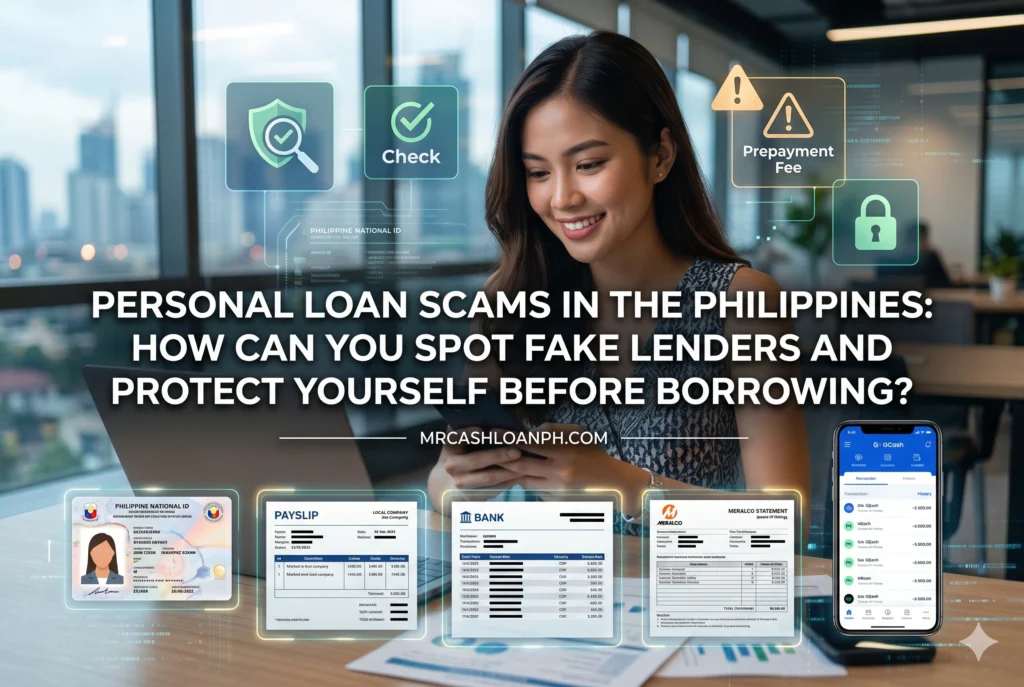
Borrowing money online has become easier than ever in the Philippines. Digital lenders, fintech apps, e-wallet integrations, and mobile-first loan platforms have helped millions of Filipinos access credit without visiting a branch.
Unfortunately, the same convenience has created opportunities for fraudsters. Fake loan agents, cloned lending apps, social media scammers, identity thieves, and advance-fee schemes continue to target borrowers who need fast cash.
Many victims do not lose money because they made poor financial decisions. They lose money because scammers deliberately imitate legitimate lenders, use fake regulatory documents, and exploit urgency during financial emergencies.
If you are considering a personal loan, knowing how scams operate may save you from financial loss, identity theft, and long-term privacy risks.
Quick Comparison: Legitimate Lender vs Fake Loan Scam
| Factor | Legitimate Lender | Loan Scam |
|---|---|---|
| Registration | Properly registered and authorized | Cannot verify authorization |
| Fees | Clearly disclosed in loan terms | Demands payment before release |
| Verification | Conducts identity and income checks | “Instant approval” with little verification |
| Communication | Official website, email, app, hotline | Telegram, WhatsApp, Facebook Messenger only |
| Documents | Transparent contracts and disclosures | Fake certificates and screenshots |
| Data Requests | KYC-related only | Excessive requests for contacts, photos, or passwords |
| Loan Approval | Based on risk assessment | Guaranteed approval for everyone |
| Urgency | Allows time to review terms | Pressures immediate payment |
Summary:
Personal loan scams in the Philippines typically involve fake lenders, advance-fee fraud, identity theft attempts, and unauthorized use of personal data. The strongest warning signs include requests for upfront payments, guaranteed approvals, fake SEC or BSP documents, and aggressive communication through social media. Before applying for a personal loan philippines, borrowers should verify lender registration, confirm official contact channels, review privacy practices, and complete an independent legitimacy check. Modern scams increasingly exploit mobile lending behavior, OTP verification systems, digital identities, and borrower urgency, making verification more important than ever.
❓Why Are Personal Loan Scams Increasing in the Philippines?
Personal loan scams are increasing because digital lending has expanded rapidly while fraudsters have become more sophisticated in mimicking legitimate financial institutions.
The Philippines now has a highly mobile-first borrowing ecosystem. Many borrowers apply through smartphones, social media advertisements, or messaging apps.
Fraudsters understand this behavior.
Instead of creating obviously fake businesses, they often:
- Clone legitimate lender branding
- Use stolen logos
- Create fake websites
- Impersonate real companies
- Copy legitimate loan application forms
- Purchase targeted social media advertisements
Recent regulatory warnings have highlighted rising advance-fee scams in which scammers pose as representatives of legitimate lending companies and demand payments before releasing loans.
A particularly dangerous trend involves impersonating registered companies while operating unauthorized loan programs under fake agents and cloned platforms.
❓What Are the Most Common Personal Loan Scams in the Philippines?
The most common scams involve advance fees, fake approvals, identity theft, cloned lending apps, and fake loan agents pretending to represent legitimate lenders.
❓How Does an Advance Fee Loan Scam Work?
An advance-fee scam occurs when a borrower is asked to pay money before receiving a loan. Legitimate lenders generally disclose fees within loan documentation rather than demanding separate upfront transfers.
Typical scam messages include:
- “Pay processing fee first”
- “Pay insurance fee”
- “Pay release fee”
- “Pay anti-money laundering clearance”
- “Pay tax clearance”
- “Pay account activation charge”
After payment:
- The loan is never released
- Additional fees are requested
- Communication stops completely
SEC advisories continue to warn borrowers about advance-fee schemes targeting online loan applicants.
❓How Do Fake Loan Agents Trick Borrowers?
Fake agents often impersonate legitimate lenders while using personal social media accounts or messaging apps.
Common tactics include:
- Sending fake IDs
- Showing edited SEC certificates
- Providing fabricated approval letters
- Using company logos without authorization
- Offering unusually large loans
An important operational detail many borrowers overlook is that a real company may be legitimate while the individual claiming to represent it is not.
Always verify:
- Official company website
- Official hotline
- Official email domain
- Published customer service channels
Never rely solely on documents sent through Messenger, Telegram, or WhatsApp.
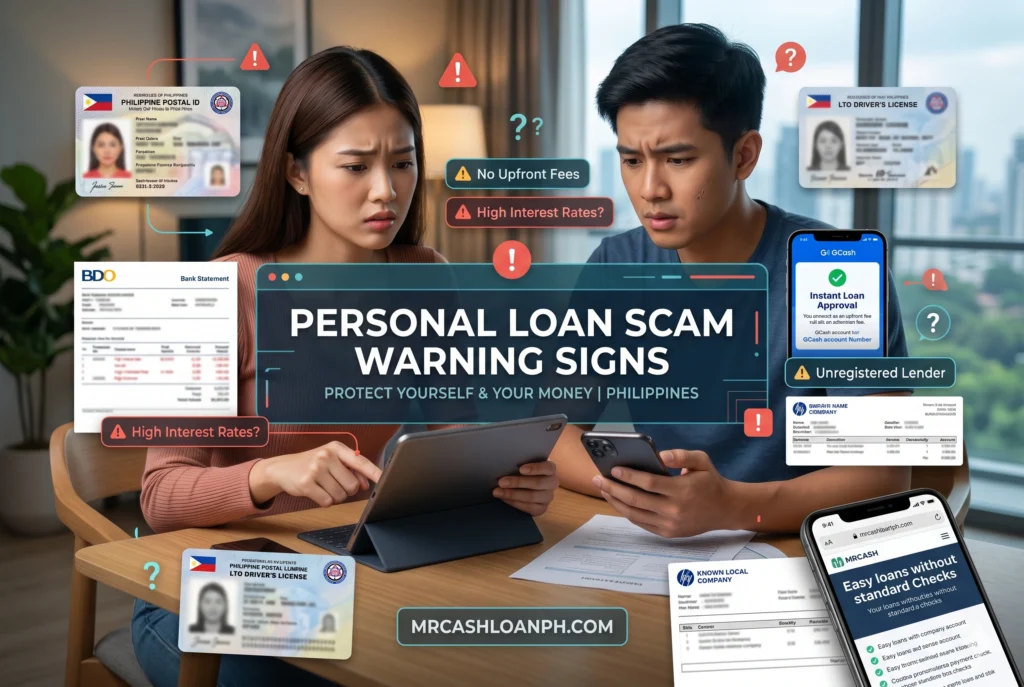
❓What Warning Signs Should Borrowers Never Ignore?
Several red flags appear repeatedly across consumer complaints and regulatory advisories.
Watch for:
Immediate Red Flags
- Guaranteed approval
- No credit assessment
- No identity verification
- No income verification
- Pressure to act immediately
- Requests for secrecy
- Upfront payment demands
Documentation Red Flags
- Blurry certificates
- Cropped screenshots
- Missing registration details
- Mismatched company names
- Unofficial email addresses
Payment Red Flags
- Personal bank accounts
- Personal GCash numbers
- Cryptocurrency transfers
- Requests to send money before release
Communication Red Flags
- Telegram-only communication
- Messenger-only communication
- No corporate website
- No customer service hotline
A useful practical rule:
If you must send money to receive a loan, stop and verify before proceeding.
❓How Do Fake Lenders Use Identity Theft Against Borrowers?
Many scams are not only designed to steal money. They are designed to collect personal information that can be reused for fraud.
Borrowers often provide:
- Government IDs
- Selfies
- Address information
- Employment records
- Mobile numbers
- Banking details
Fraudsters can use this information for:
- Fake loan applications
- Account takeovers
- SIM registration abuse
- Phishing attacks
- Social engineering
Modern lending systems use:
- Facial verification
- Device fingerprinting
- OTP authentication
- Behavioral risk scoring
Because these systems rely on identity verification, stolen personal information has become extremely valuable to criminals.
Recent BSP advisories have warned the public about fraudulent documents and schemes designed to collect personal information and sensitive financial details.
❓How Can Borrowers Verify Whether a Lender Is Legitimate?
The safest approach is to verify independently rather than relying on information provided by the lender.
Step 1: Verify Regulatory Registration
Check whether the company appears in official regulatory records.
Never trust screenshots alone.
Look for:
- Registered company details
- Lending authority information
- Official business records
Step 2: Confirm Official Contact Channels
Compare:
- Website address
- Email domain
- Hotline number
- Social media accounts
Scammers frequently create look-alike pages with small spelling differences.
Step 3: Examine the Application Process
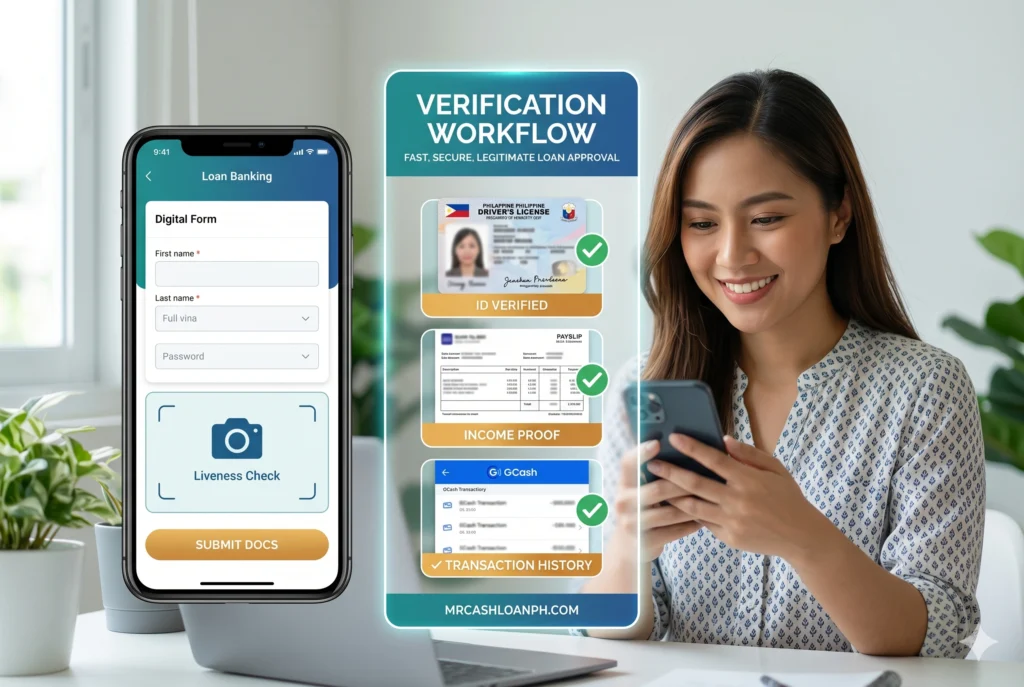
Legitimate lenders typically conduct a structured loan verification process before approving funds.
Verification often includes:
- Identity validation
- Income assessment
- Employment checks
- Contact verification
- Fraud screening
If approval happens within minutes without meaningful verification, caution is warranted.
Step 4: Review Privacy Practices
A legitimate lender should clearly explain:
- What data is collected
- Why it is collected
- How it is stored
- How it is shared
Transparency is a strong trust signal.
❓Can a Legitimate Lending App Still Create Privacy Risks?
Yes. Registration alone does not automatically eliminate privacy concerns.
Several years of consumer complaints involved lending apps accused of collecting excessive personal information and using aggressive collection tactics. Regulatory actions have addressed apps found to be harvesting unnecessary borrower data.
❓Why Should You Be Careful With Contact Permissions?
Access to your contact list may create privacy risks if data is misused.
Borrowers should carefully evaluate requests for:
- Contacts
- Photos
- Gallery access
- Social media permissions
Current privacy discussions continue to emphasize caution regarding excessive permissions granted to lending applications.
❓What Does Responsible Data Collection Look Like?
Responsible lenders generally collect information necessary for:
- Identity verification
- Fraud prevention
- Credit assessment
- Regulatory compliance
Excessive collection without a clear purpose should raise questions.
❓How Do Legitimate Personal Loan Applications Usually Work?
Real lenders follow structured workflows designed to evaluate risk, comply with regulations, and prevent fraud.
Most applications include:
- Application submission
- Identity verification
- Document review
- Risk assessment
- Approval decision
- Contract acceptance
- Fund disbursement
Applicants are often asked to provide documents that satisfy normal personal loan requirements, such as:
- Government-issued identification
- Proof of income
- Employment information
- Banking details
The presence of verification checks is usually a positive sign rather than an inconvenience.
Fraudsters frequently avoid these steps because their goal is immediate payment collection rather than actual lending.
❓What Should You Do If You Already Sent Money to a Fake Lender?
Act immediately to preserve evidence and limit further damage.
Take the following steps:
- Stop sending additional payments
- Save screenshots
- Save transaction receipts
- Save chat histories
- Record phone numbers used
- Preserve email communications
- Change compromised passwords
If personal information was shared:
- Monitor financial accounts
- Watch for suspicious activity
- Review credit-related communications
- Strengthen account security
Many victims lose more money because scammers claim another payment will finally release the loan.
In reality, repeated fee requests are a common feature of advance-fee fraud.
❓Why Do Smart Borrowers Still Fall for Loan Scams?
Scammers exploit urgency, stress, and financial pressure rather than a lack of intelligence.
Common emotional triggers include:
- Medical emergencies
- Tuition payments
- Rent obligations
- Business cash-flow gaps
- Debt consolidation
Fraudsters often promise:
- Same-day release
- Guaranteed approval
- No verification
- Large loan amounts
These promises are carefully designed to override normal caution.
One operational pattern frequently observed is that victims become more vulnerable after investing time in the application process. Once documents are submitted, borrowers feel committed and become more likely to pay requested fees.
Understanding this psychological pressure helps borrowers recognize manipulation before money changes hands.
❓How Can You Borrow Safely Without Becoming a Scam Victim?
Safe borrowing starts with verification, patience, and realistic expectations.
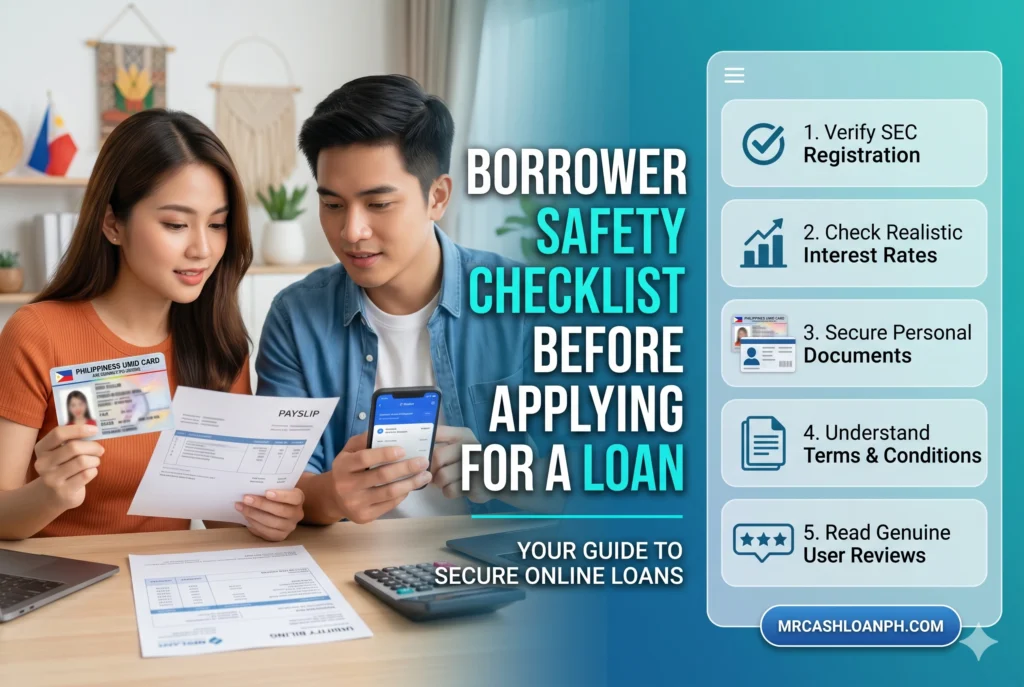
Follow this checklist:
Safe Borrowing Checklist
✅ Verify lender legitimacy independently
✅ Research company history
✅ Confirm official contact channels
✅ Review privacy disclosures
✅ Read loan contracts carefully
✅ Expect verification procedures
✅ Compare multiple lenders
✅ Protect OTPs and passwords
✅ Use only official apps and websites
Never Do These Things
❌ Pay advance fees
❌ Share OTP codes
❌ Send passwords
❌ Share banking credentials
❌ Trust screenshots as proof
❌ Rush because of pressure tactics
❌ Install unknown applications
Borrowers seeking a personal loan philippines product should remember that legitimate lenders generally welcome verification because transparency builds trust.
Frequently Asked Questions
How do fake lenders operate?
Fake lenders typically use social media, messaging apps, cloned websites, and impersonation tactics to attract borrowers. Many eventually request advance payments or collect personal information for fraudulent purposes.
How can borrowers verify legitimacy?
Verify registration independently, confirm official communication channels, review privacy practices, and compare information across multiple trusted sources rather than relying on documents sent by the lender.
Are guaranteed loan approvals legitimate?
Not usually. Legitimate lenders normally perform risk assessment, identity verification, and fraud screening before making approval decisions.
Why do scammers ask for processing fees?
Advance-fee scams rely on collecting payments before loan release. Once money is sent, scammers may disappear or demand additional fees.
Can scammers use fake SEC or BSP documents?
Yes. Fraudsters frequently create edited certificates, forged approval letters, and fake regulatory documents to appear legitimate. Recent advisories continue to warn against this practice.
Is identity theft a risk when applying for loans online?
Yes. IDs, selfies, banking information, and personal records can be abused if submitted to fraudulent operators.
Conclusion
Personal loan scams in the Philippines continue to evolve alongside digital lending technology. Fraudsters now imitate legitimate lenders, create convincing online identities, exploit borrower urgency, and use sophisticated social engineering techniques to gain trust.
The strongest protection remains independent verification. A legitimate lender should be transparent about its identity, verification procedures, fees, privacy practices, and approval process. Any request for upfront payments, confidential credentials, or rushed action deserves immediate scrutiny.
Before submitting documents or sending money, verify first. A few minutes spent checking legitimacy can prevent financial loss, identity theft, and long-term privacy problems. Responsible borrowing begins with choosing a lender you can trust.
References
- Securities and Exchange Commission (SEC)
Organization: SEC Philippines
Resource: Public Advisories on Advance Fee Scams and Online Lending
URL: https://www.sec.gov.ph/ - Bangko Sentral ng Pilipinas
Organization: BSP
Resource: Consumer Protection and Fraud Advisories
URL: https://www.bsp.gov.ph/ - National Privacy Commission
Organization: NPC
Resource: Online Lending App Privacy and Consumer Protection Advisories
URL: https://privacy.gov.ph/ - Philippine Information Agency
Organization: PIA
Resource: SEC warns public against online lending scams
URL: https://pia.gov.ph/news/sec-warns-public-against-online-lending-scams/ - Philippine Information Agency
Organization: PIA
Resource: SEC warns: Advance fee scam on the rise
URL: https://pia.gov.ph/news/sec-warns-advance-fee-scam-on-the-rise/ - National Privacy Commission
Organization: NPC
Resource: Privacy Commission orders immediate takedown of four online lending apps
URL: https://privacy.gov.ph/privacy-commission-orders-immediate-takedown-of-four-online-lending-apps/ - National Privacy Commission
Organization: NPC
Resource: NPC conducts hearings on online lending app complaints
URL: https://privacy.gov.ph/npc-conducts-hearings-on-48-online-lending-apps-after-over-400-harassment-complaints/
Last Updated on September 9, 2026 by David Vargas
