
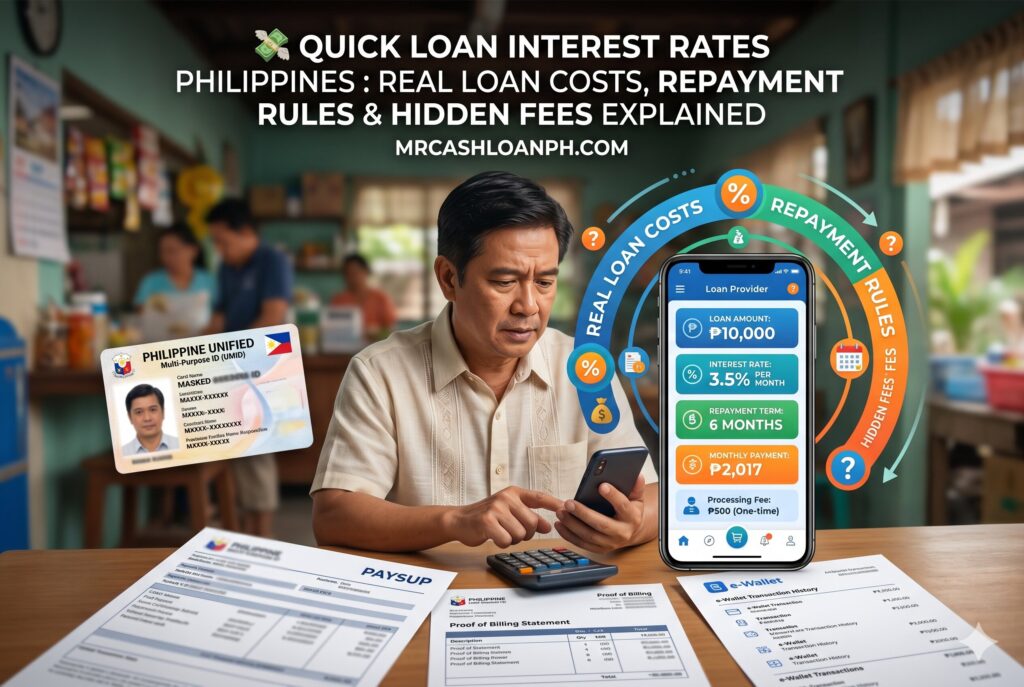
Online lending in the Philippines has become faster and more accessible through mobile apps, e-wallet integrations, and digital verification systems. But many borrowers focus only on approval speed and overlook the real cost of borrowing. A ₱5,000 quick loan can become significantly more expensive once interest, processing fees, late penalties, rollover charges, and collection costs are added.
This article explains how quick loan interest rates in the Philippines actually work, how repayment schedules are computed, what happens after missed payments, and how borrowers can compare lenders responsibly before applying. It also covers repayment systems, BSP and SEC-related compliance practices, e-wallet payment flows, and realistic borrowing behaviors commonly seen across Philippine digital lending platforms.
Why Quick Loan Costs in the Philippines Often Feel Higher Than Expected 📱
Many first-time borrowers search for a quick loan online Philippines option because they need urgent cash for bills, tuition, medical expenses, or emergency purchases. The approval process is usually fast because lenders rely on automated risk assessment systems instead of traditional branch-based underwriting.
However, digital convenience also changes how loan costs are presented.
Instead of seeing a single annual interest rate, borrowers may encounter:
- Monthly interest rates
- Processing fees
- Platform fees
- Service charges
- Collection penalties
- Rollover fees
- Daily overdue interest
Some lending apps advertise “low monthly rates” without clearly showing the Annual Percentage Rate (APR). A loan with a 3% monthly interest rate may appear affordable initially, but the effective annual cost can become much higher once fees are included.
Digital lenders also operate differently from banks. Many fintech platforms use:
- Automated KYC verification
- Device risk scoring
- Mobile behavior analytics
- E-wallet transaction history
- Salary inflow monitoring
- Fraud prevention systems
This allows lenders to approve higher-risk borrowers faster, but the pricing often reflects that risk.
How Quick Loan Interest Rates Philippines Lenders Usually Apply
Monthly Interest vs APR: What Borrowers Miss
One of the biggest borrower mistakes is comparing loans using only the monthly interest rate.
For example:
| Loan Type | Monthly Interest | Loan Term | Estimated Total Cost |
|---|---|---|---|
| ₱10,000 Quick Loan | 3% | 30 days | ₱10,300 + fees |
| ₱10,000 Installment Loan | 2% | 6 months | Higher total interest over time |
| Salary Loan | 1.5% | 12 months | Lower monthly burden |
APR gives a clearer picture because it includes:
- Interest
- Processing fees
- Service charges
- Mandatory platform costs
A lender advertising “2% monthly interest” may still have a much higher effective borrowing cost once all deductions are included.
Why Online Lending Apps Charge Higher Rates
Digital lending platforms usually accept borrowers who may not qualify for traditional bank loans.
That includes:
- Freelancers
- Gig workers
- Online sellers
- First-time borrowers
- Users without credit cards
- Applicants with thin credit files
Because of higher repayment risk, many lenders apply:
- Short repayment periods
- Higher monthly rates
- Aggressive late penalties
- Automated collections
Lenders also spend heavily on fraud detection, digital onboarding, identity verification, and repayment automation systems.
How Online Loan Repayments Are Calculated
Fixed Repayment Structure
Many Philippine lending apps use fixed repayment systems.
Example:
| Loan Amount | Interest | Fees | Total Repayment |
|---|---|---|---|
| ₱5,000 | ₱500 | ₱300 | ₱5,800 |
The borrower repays one full amount on the due date.
This structure is common in:
- Small cash loans
- Salary advances
- 7-day loans
- 14-day loans
- 30-day quick loans
The shorter the repayment period, the smaller the interest may appear — but short due dates can create repayment pressure.
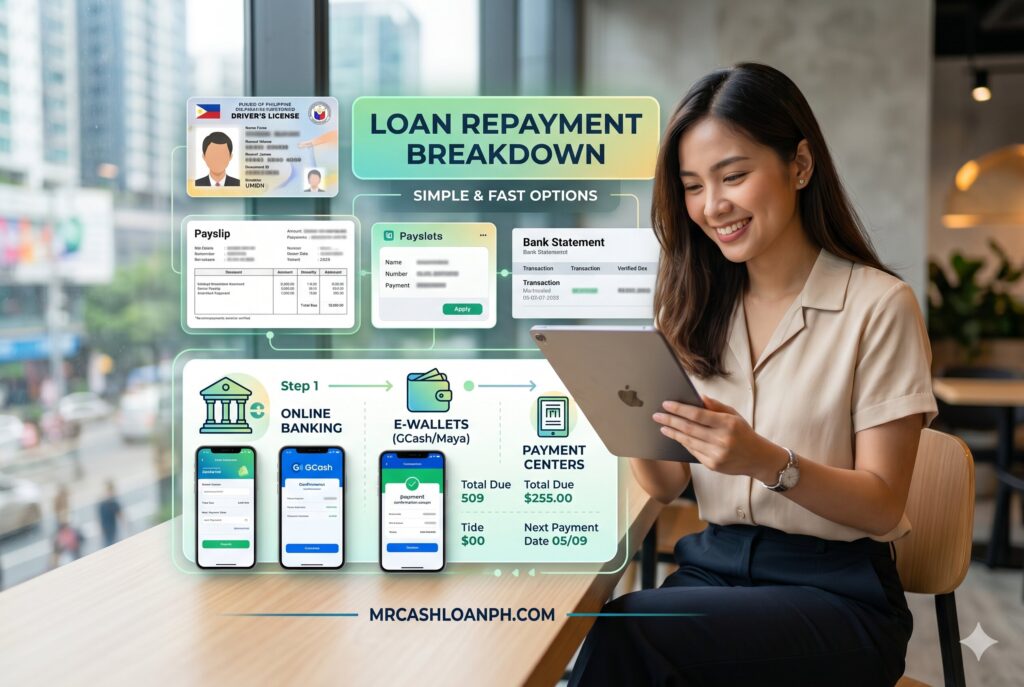
Quick Loan Repayment Breakdown Philippines
(Sample quick loan repayment calculation showing interest fees penalties and total payable amount in the Philippines)
Installment and Amortization Systems
Some lenders now offer installment-based repayment structures.
Instead of one lump-sum repayment, borrowers pay:
- Weekly installments
- Biweekly payments
- Monthly amortization
This structure reduces immediate repayment pressure.
Example amortization flow:
| Month | Payment | Interest Portion | Principal Portion |
|---|---|---|---|
| 1 | ₱2,100 | ₱600 | ₱1,500 |
| 2 | ₱2,100 | ₱450 | ₱1,650 |
| 3 | ₱2,100 | ₱300 | ₱1,800 |
Borrowers comparing a same day quick loan online Philippines option should check whether the lender offers installment repayment or single-payment maturity.
Installment loans often feel safer for borrowers with variable income patterns.
Common Fees Borrowers Should Check Before Accepting a Loan ⚠️
Processing and Service Fees
Many digital lenders deduct fees before disbursement.
Example:
- Approved loan: ₱10,000
- Processing fee: ₱1,200
- Insurance fee: ₱300
- Cash received: ₱8,500
But repayment may still be based on the original ₱10,000.
Borrowers sometimes misunderstand this because the app emphasizes “approved amount” rather than actual disbursed cash.
Late Payment Penalties
Late payment costs vary significantly across platforms.
Common penalty structures include:
- Daily overdue charges
- Fixed penalty fees
- Additional monthly interest
- Collection service fees
A missed payment can grow quickly if penalties compound daily.
Example:
| Days Late | Possible Additional Charges |
|---|---|
| 1–7 days | Daily penalty interest |
| 8–30 days | Collection reminders and fees |
| Beyond 30 days | External collection agency involvement |
This is why affordability evaluation matters more than approval speed.
Rollover Debt and Loan Extensions
Some apps allow borrowers to extend loans by paying only the interest first.
While this may temporarily reduce pressure, it can create rollover debt.
Example:
- Original loan: ₱5,000
- Interest payment extension: ₱800
- Principal remains unpaid
- New interest cycle begins
Repeated extensions may result in borrowers paying more in fees than the original loan value.
What Happens After Missed Loan Payments?
Automated Collection Systems
Most digital lenders now use automated collection systems linked to:
- SMS reminders
- Email notifications
- App push notifications
- E-wallet payment reminders
Repayment triggers often begin before the due date.
Borrowers usually receive:
- Due-date reminders
- Grace period notices
- Penalty alerts
- Collection escalation warnings
Some lenders use behavioral repayment scoring internally. Borrowers who pay early or on time may receive:
- Lower future interest
- Higher loan limits
- Longer repayment terms
Collection Agencies and Escalation Practices
If payments remain unpaid, lenders may transfer accounts to collection agencies.
Collection activities may include:
- Repeated contact attempts
- Formal demand notices
- Negotiated settlement offers
Legitimate lenders generally follow SEC-related consumer protection expectations and data privacy obligations.
Borrowers should be cautious of abusive collection tactics from unregulated apps.
A safe quick loan online Philippines provider should clearly disclose:
- Penalty structures
- Collection practices
- Data handling policies
- Complaint channels
- Repayment procedures
Are Online Loan Fees Regulated in the Philippines?
The Role of SEC and BSP
The Philippine lending ecosystem involves both the Securities and Exchange Commission (SEC) and Bangko Sentral ng Pilipinas (BSP).
The SEC oversees many lending and financing companies operating through mobile apps.
Meanwhile, BSP supervises banks, e-money issuers, and digital financial systems tied to:
- E-wallets
- Digital payments
- Electronic fund transfers
Legitimate fintech lenders are expected to provide transparent disclosures regarding:
- Interest rates
- Fees
- Penalties
- Repayment obligations
However, not all online lending apps operate responsibly.
Red Flags Borrowers Should Watch
Potential warning signs include:
- No visible SEC registration information
- Hidden fees before disbursement
- Pressure tactics before due dates
- Unrealistic “guaranteed approval” claims
- Unclear repayment schedules
- Aggressive access to phone contacts
Borrowers researching why quick loan online applications get rejected sometimes overlook another important issue: some lenders intentionally approve risky borrowers because high penalty revenue becomes part of their business model.
Responsible borrowing means evaluating both approval probability and repayment sustainability.
How E-Wallet Repayment Systems Work 💳
Digital Payment Integration
Modern lenders commonly integrate with:
- E-wallets
- Online banking apps
- QR payment systems
- InstaPay
- PESONet
Repayments may happen through:
- Manual transfer
- Auto-debit authorization
- App-linked payment portals
This improves convenience but also increases repayment automation.
Borrowers should always confirm:
- Exact due date
- Cutoff times
- Processing delays
- Payment confirmation receipts
Why Payment Timing Matters
Many borrowers assume sending payment on the due date is enough.
However, some lenders apply penalties if payment posting happens after cutoff hours.
For example:
| Payment Sent | Payment Posted | Possible Outcome |
|---|---|---|
| 9:00 PM due date | Next banking day | Late fee may apply |
| Weekend payment | Monday posting | Potential overdue charge |
Keeping screenshots and transaction references is important when disputes arise.
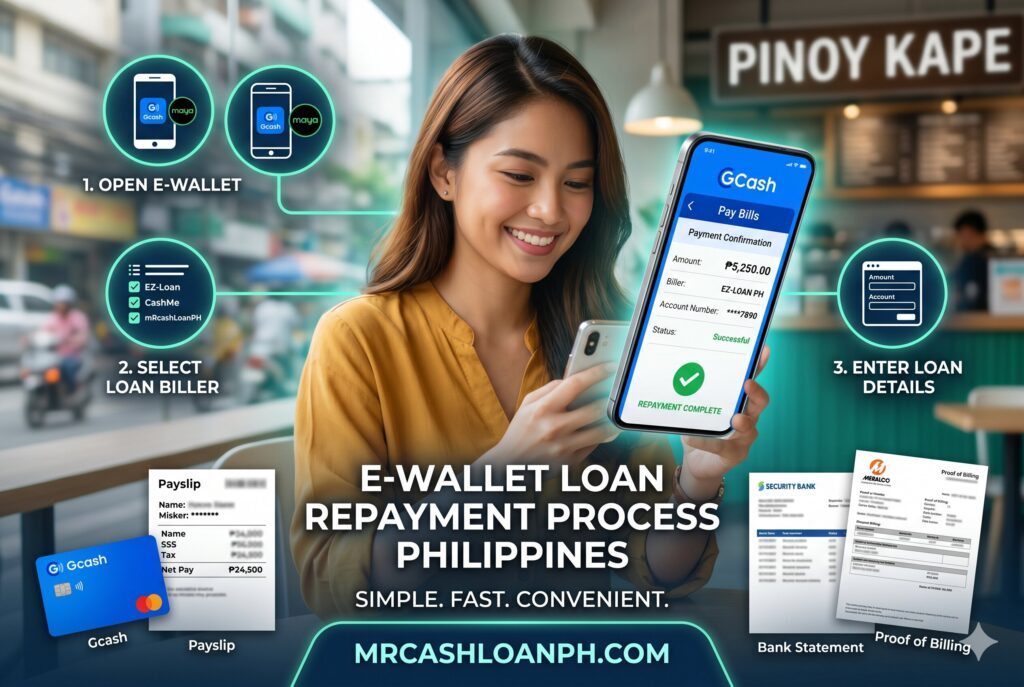
E-Wallet Loan Repayment Process Philippines
(Borrower paying online loan through Philippine e-wallet and digital banking repayment system)
How Borrowers Can Compare Loan Costs Properly
Questions to Ask Before Applying
Before accepting any loan offer, borrowers should check:
- What is the total repayment amount?
- Is the interest monthly or annual?
- Are fees deducted upfront?
- Is there a grace period?
- What are the late penalties?
- Is early repayment allowed?
- Can the repayment term be extended?
- Does the lender report repayment behavior?
Many borrowers compare only approval speed.
But smarter comparison focuses on:
- Total payable amount
- Flexibility
- Repayment structure
- Fee transparency
- Customer support quality
Affordability Assessment Matters More Than Loan Size
Lenders often approve amounts larger than what borrowers can comfortably repay.
Responsible borrowing means checking:
- Monthly income stability
- Existing debts
- E-wallet cash flow
- Upcoming expenses
- Emergency savings
Freelancers and gig workers should pay particular attention to irregular income timing.
A borrower earning variable weekly income may struggle with short lump-sum repayment schedules even if total monthly earnings appear sufficient.
Can Borrowers Repay Early?
Early Repayment Benefits
Some lenders allow early repayment without penalties.
Benefits may include:
- Lower interest accumulation
- Better repayment profile
- Higher future approval probability
- Reduced debt stress
However, some platforms still charge:
- Fixed processing fees
- Pre-termination costs
- Full-period interest
Borrowers should read repayment terms carefully before confirming the loan.
Why Responsible Borrowers Often Repay Ahead of Schedule
Digital lenders increasingly use repayment behavior as part of internal borrower scoring systems.
Positive behaviors include:
- Early repayment
- Consistent due-date payments
- Stable account activity
- Verified identity consistency
This may affect future loan offers more than income alone.
Real Borrower Problems That Lead to Debt Cycles
Short-Term Loans Used for Long-Term Problems
One common issue involves borrowers using short-term loans for recurring monthly shortages.
Examples include:
- Rent deficits
- Utility bills
- Tuition balances
- Credit card repayments
This often creates repeated borrowing patterns.
Multiple App Borrowing
Some borrowers manage one loan by taking another loan elsewhere.
This creates overlapping due dates and rising repayment pressure.
Warning signs include:
- Paying loans with other loans
- Frequent loan extensions
- Minimum-only repayments
- Constant due-date stress
Borrowers facing this pattern should pause additional borrowing and reassess affordability before applying again.
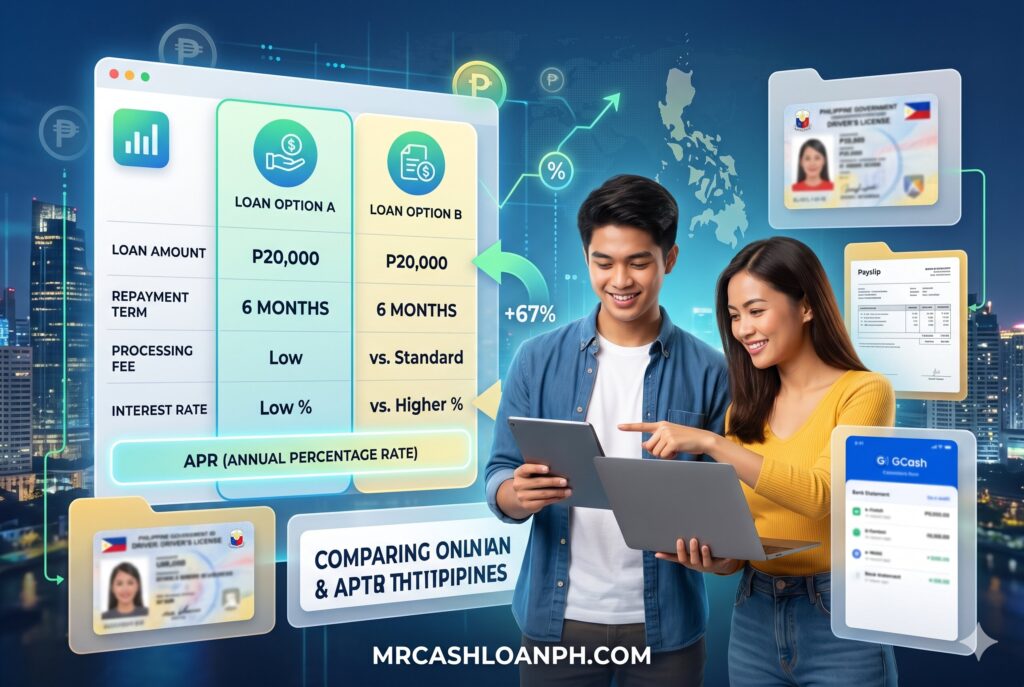
Comparing Online Loan Costs and APR in the Philippines
(Philippine borrower comparing online loan interest rates APR repayment schedules and total borrowing costs)
What Is the Interest Rate for Quick Online Loans?
Quick online loan interest rates in the Philippines vary depending on:
- Borrower risk profile
- Loan amount
- Repayment duration
- Lender policies
- Verification quality
Many digital lenders charge monthly interest rates ranging from around 1% to several percent monthly, plus additional fees.
The true borrowing cost is better evaluated through:
- APR
- Total repayment amount
- Fee deductions
- Penalty structure
Borrowers should avoid evaluating loans based solely on advertised monthly interest.
How Are Online Loan Repayments Calculated?
Online loan repayments are commonly calculated using:
- Fixed short-term repayment
- Installment amortization
- Interest-plus-fee models
The final repayment amount may include:
- Principal
- Monthly interest
- Processing fees
- Service charges
- Penalties if overdue
Many apps automatically compute repayment schedules inside the lending platform before final confirmation.
Borrowers should review the complete repayment breakdown before accepting funds.
What Happens After Missed Payments?
Missed payments usually trigger:
- Automated reminders
- Penalty charges
- Collection outreach
- Credit reputation impact
- Possible collection agency escalation
Ignoring lender communication generally worsens repayment pressure.
Borrowers struggling financially should contact lenders early to ask about restructuring or settlement options before accounts become severely overdue.
Are Online Loan Fees Regulated?
Legitimate lenders operating in the Philippines are generally expected to comply with SEC registration requirements and applicable consumer protection expectations.
Borrowers should verify:
- Registration disclosures
- Transparent fee presentation
- Clear repayment terms
- Accessible customer support
Apps hiding costs or using aggressive tactics should be approached cautiously.
Practical Borrowing Tips Before Applying 📌
Safer Borrowing Habits
- Borrow only for necessary expenses
- Compare total repayment amounts
- Avoid stacking multiple loans
- Keep repayment proof records
- Read penalty disclosures carefully
Better Loan Planning Habits
Before applying, calculate:
- Expected salary date
- Existing monthly obligations
- Emergency expense risks
- Repayment buffer capacity
A fast approval does not automatically mean a loan is financially manageable.
Conclusion
Quick online loans in the Philippines provide fast access to cash, but borrowers should evaluate more than approval speed. Interest rates, processing fees, repayment schedules, rollover risks, and late payment penalties all affect the real borrowing cost.
Responsible borrowers compare total repayment amounts, verify lender transparency, and assess affordability before accepting loan offers. SEC visibility, repayment clarity, and safe collection practices are important indicators of a legitimate lending platform.
Digital lending can be useful during financial emergencies when managed carefully. But repeated short-term borrowing, missed payments, and rollover extensions can quickly create debt pressure. Reviewing repayment capacity first helps borrowers make safer, more sustainable financial decisions.
Last Updated on September 16, 2026 by David Vargas
