
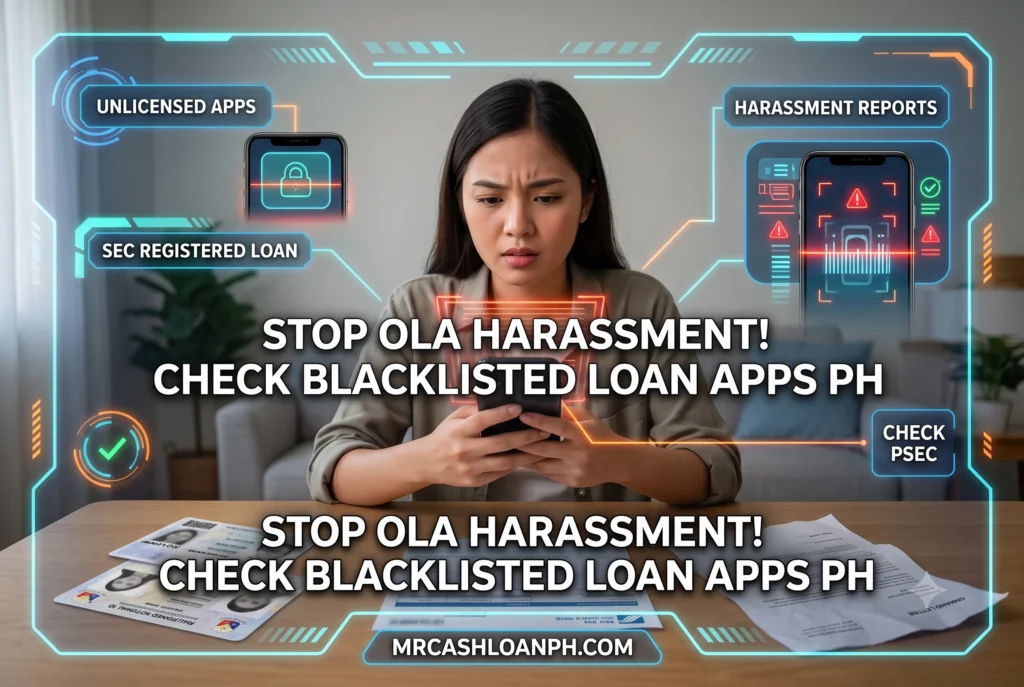
If your phone screen is currently lit up with abusive text messages from an online lending app (OLA) threatening to message your family, boss, or Facebook friends, you are likely dealing with an illegal, unregistered lender. Many borrowers come to us in a state of absolute panic, convinced they are about to face public ruin or even imprisonment because of a delayed payment. First, know this: under the 1987 Philippine Constitution, no one goes to jail for an unpaid digital civil debt.
The threats you are receiving are textbook intimidation tactics designed to exploit your fear. Over the last decade of analyzing digital lending operations in the Philippines, our team has tracked how predatory platforms weaponize your personal data. This guide is built to help you regain control, secure your privacy, and understand exactly how to report these abusive entities to the authorities.
Summary:
Blacklisted loan apps in the Philippines operate illegally by using unauthorized contact scraping, exorbitant hidden fees, and severe public harassment. To stop OLA harassment, immediately revoke the app’s permissions, document all abusive messages, and file a formal complaint with the Philippine National Police Anti-Cybercrime Group (PNP-ACG) and the National Privacy Commission (NPC). Remember that unpaid civil debts to unregistered platforms cannot result in imprisonment. Always cross-check a lender’s Certificate of Authority with the SEC before providing personal data.
Key Takeaways: Legitimate Lenders vs. Illegal OLAs
| Feature | Legitimate SEC-Registered Lenders | Illegal / Blacklisted Loan Apps |
| Contact List Access | Never asks for access to your full phonebook. | Forces you to grant full access to contacts before showing loan terms. |
| Debt Collection Style | Follows BSP fair collection guidelines; calls only during business hours. | Uses death threats, profanity, and messages your friends/family to shame you. |
| Fee Transparency | Shows exact interest rates, processing fees, and final payout upfront. | Hides fees; you might borrow PHP 5,000 but only receive PHP 2,800. |
| Regulatory Status | Displays a valid Certificate of Authority (CA) number in the app. | Uses fake company names or operates entirely unregistered. |
What Are the Early Warning Signs of a Fake or Unregistered Loan App?
Fake loan apps demand full access to your smartphone’s contact list, deduct massive hidden processing fees before disbursement, and lack a valid SEC Certificate of Authority. Spotting these red flags early prevents data theft.
During our regular audits of the Philippine digital lending space, we frequently install and test reported applications to map their operational behaviors. We never use real identities, but the data harvesting methods these apps use are identical across the board. The warning signs are usually obvious within the first two minutes of opening the app.
Why Does the App Ask for Access to My Entire Contact List?
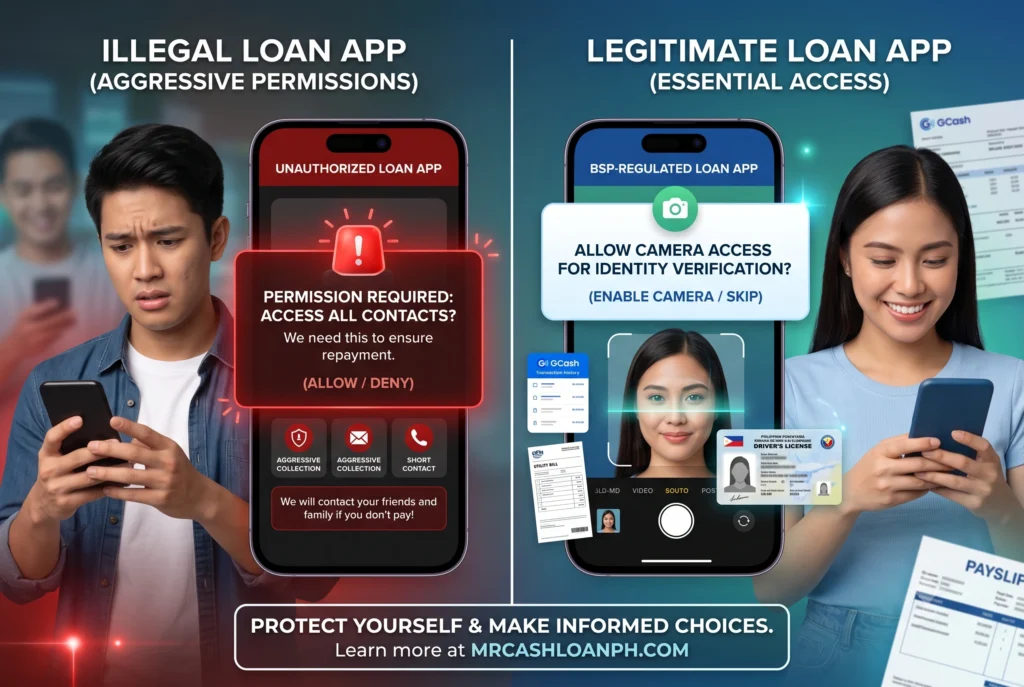
Illegal apps harvest your contact list to use your friends and family as leverage for future extortion. Under NPC Circular No. 20-01, it is strictly prohibited for online lenders to scrape your phonebook.
When our team tested a heavily reported APK file distributed through social media ads, we noticed a critical user interface friction point. Before we could even view the promised interest rate, a mandatory pop-up demanded permission to access “Contacts,” “Call Logs,” and “Media Gallery.” If you click “Allow,” the app instantly executes a background script that compiles every single number in your phone into a JSON file and transmits it to their offshore servers.
They do not need this information to assess your creditworthiness. Legitimate credit scoring relies on alternative data like utility bills, e-wallet transaction history, or government ID verification. Predatory apps harvest this data specifically to build a harassment network. If an app refuses to let you apply without accessing your phonebook, uninstall it immediately.
How Do Hidden Fees and Instant Deductions Trap Borrowers?
Unregistered lenders trap borrowers by deducting up to 50% of the principal loan amount upfront as a fake processing fee, while still charging exorbitant daily interest on the full amount.
Predatory lenders design their payout structures to ensure you fail. In a recent analysis of a blacklisted platform’s ledger, we observed a standard trap: a borrower applies for a PHP 4,000 loan. Instead of receiving the full amount, the app instantly deducts PHP 1,800 as a “service and risk assessment fee.” The borrower receives only PHP 2,200 in their GCash or bank account.
However, the borrower is still required to pay back the full PHP 4,000, plus daily interest, usually within an impossibly tight window of 5 to 7 days. When the borrower inevitably defaults, the late fees compound daily, sometimes doubling the debt in a matter of weeks. This is mathematical extortion, not a financial product.
What Legal Actions Can I Take If an OLA Threatens My Family and Friends?
You can stop OLA harassment by documenting all threats, revoking app permissions, and filing official cybercrime complaints with the PNP-ACG and the Cybercrime Investigation and Coordinating Center (CICC).
We understand how paralyzing it feels when an agent threatens to post your face on Facebook labeling you a “scammer.” This is a severe violation of the law. You have clear, actionable rights, and there is a specific legal framework designed to protect you from unfair collection practices.
How Do I File a Complaint with the PNP-ACG and CICC?
To file a complaint, compile screenshots of all abusive messages, call logs, and transaction receipts, then submit these as evidence through the official PNP-ACG e-complaint portal or the CICC hotline.
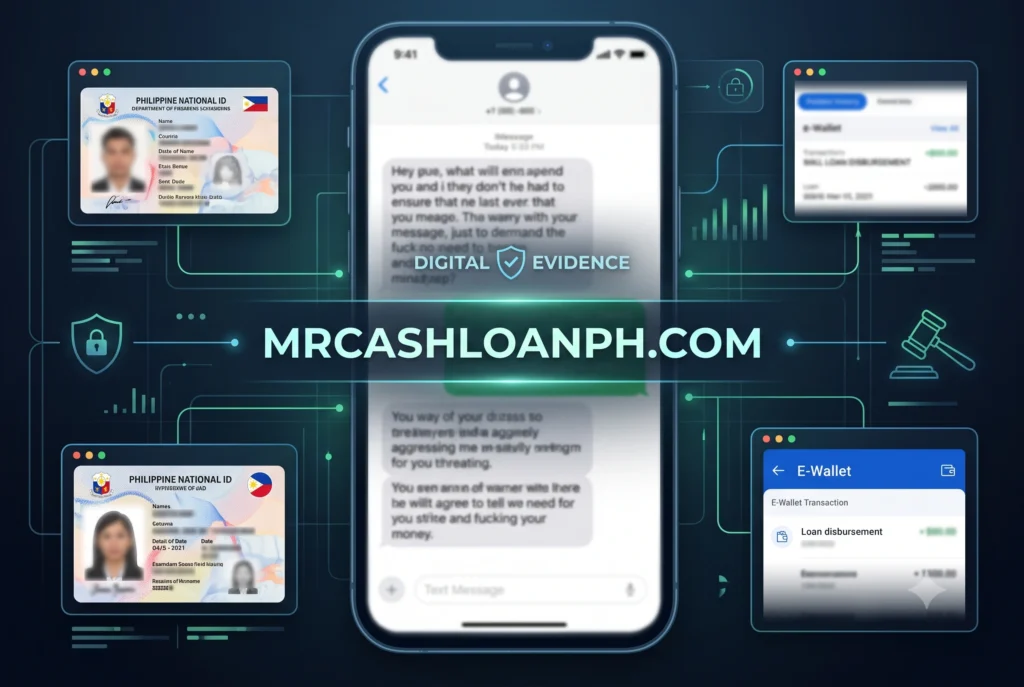
First, do not delete the abusive messages. You need evidence. Create a dedicated folder on your phone or Google Drive and start taking screenshots of every text message, Viber chat, or WhatsApp message containing threats, profanity, or evidence of public shaming. Note the phone numbers and the exact times of the calls.
Once you have gathered this evidence, you can contact the Philippine National Police Anti-Cybercrime Group (PNP-ACG). They have a dedicated online portal for cybercrime complaints. Alternatively, the Cybercrime Investigation and Coordinating Center (CICC) operates the 1326 hotline specifically for reporting digital fraud and harassment. Providing them with exact screenshots and the app’s APK details helps law enforcement trace the operational syndicates behind these platforms.
Can the National Privacy Commission (NPC) Stop Contact Shaming?
Yes, the NPC actively issues cease and desist orders against lenders that engage in unauthorized processing of personal data, including contacting people on your phonebook who never consented to be guarantors.
The NPC has repeatedly penalized online lending companies for violating the Data Privacy Act of 2012. If a collector texts your employer or your mother – people who never signed up to be co-makers or guarantors – the app has committed a severe data breach. You can file a formal complaint with the NPC. While the NPC moves at a regulatory pace and might not stop a text message on the exact day you report it, your complaint adds to the legal case required to secure a permanent ban and operational takedown of the app.
How Do I Verify If a Lending App is Legit or Permanently Blacklisted?
You can verify a loan app’s legitimacy by cross-referencing its company name and Certificate of Authority (CA) number directly on the official Securities and Exchange Commission (SEC) website.
Do not trust an app just because it features a professional logo or is available on the Google Play Store. Malicious developers frequently find ways to bypass initial store filters. To protect yourself, you must conduct a manual sec registration verification.
During our application testing procedures, we specifically look for the mandatory CA number on the app’s main page or ‘About’ section. If a company claims to be registered, we open the official SEC website and navigate to their list of registered financing and lending companies.
Here is a critical operational nuance many miss: a company might have SEC corporate registration (meaning they are recognized as a business in the Philippines), but they might not hold a Certificate of Authority to Operate as a Lending Company. These are two different documents. If they do not have the CA, they are operating illegally. Finding legitimate, SEC-registered apps is the only way to ensure your data rights are protected under Philippine law.
Can I Go to Jail for Not Paying an Illegal Online Loan?
No, under Article III, Section 20 of the 1987 Philippine Constitution, no person shall be imprisoned for debt. Unpaid online loans are civil liabilities, not criminal offenses.
This is the single most common fear we encounter, and rogue collectors exploit it relentlessly. They will send you fake subpoenas, fabricated barangay summons, or text messages claiming a police convoy is en route to your exact GPS location. These are entirely fabricated.
An unpaid digital loan is a civil matter. There is no such thing as a “warrant of arrest for estafa” simply because you could not meet a 7-day payment deadline on an app. Estafa involves complex, premeditated deceit, not a simple failure to pay a high-interest digital loan. While legitimate lenders can file a small claims case against you in a civil court, illegal blacklisted apps will almost never do this because exposing themselves in a real courtroom would lead to their immediate arrest for operating an unregistered financial business.
What Should Be My Next Steps to Regain Financial Control and Peace of Mind?
To recover, immediately uninstall the abusive app, inform your contacts about the data breach, secure your social media profiles, and transition your financial needs to verified digital banks.
The immediate aftermath of an OLA harassment campaign is exhausting, but you can shut down their access to your life.
- Lock Down Your Data: Go to your phone’s application settings, find the abusive app, manually revoke all permissions (especially Contacts and Storage), and uninstall it.
- Warn Your Network: Post a brief, calm message on your social media or send a broadcast text to your close contacts. You do not need to explain the debt. Simply say: “My phone’s contacts were compromised by a malicious application. If you receive any strange messages using my name, please block the number and ignore it. I apologize for any inconvenience.”
- Secure Your Social Media: Go to your Facebook privacy settings. Lock your profile. Make your friends list visible only to yourself (“Only Me”). Restrict who can send you messages or friend requests. Collectors use public friends lists to find secondary targets for harassment.
- Change Your SIM (If Necessary): If the calls reach a level where you can no longer function at work, it may be time to buy a new SIM card. Update your banking records and essential contacts with the new number, and abandon the old one entirely.
Once the noise stops and the immediate crisis is handled, focus on rebuilding your financial habits. If you need credit in the future, only engage with platforms that are provably safe and transparent. Licensed digital banks and verified e-wallet credit lines adhere to strict BSP regulations, offering fair interest rates without resorting to psychological warfare. Your peace of mind is worth far more than any fast cash a predatory app can offer.
References
- Securities and Exchange Commission (SEC)Organization: Securities and Exchange Commission PhilippinesResource: List of Lending Companies with Revoked Certificates of AuthorityURL: https://www.sec.gov.ph/lending-companies-and-financing-companies-2/list-of-revoked-and-suspended-lending-companies/
- National Privacy Commission (NPC)Organization: National Privacy CommissionResource: NPC Circular No. 20-01: Guidelines on the Processing of Personal Data for Loan-Related TransactionsURL: https://www.privacy.gov.ph/wp-content/uploads/2020/10/NPC-Circular-No.-20-01-Guidelines-on-the-Processing-of-Personal-Data-for-Loan-Related-Transactions.pdf
- Cybercrime Investigation and Coordinating Center (CICC)Organization: Department of Information and Communications TechnologyResource: Inter-Agency Response to Online Fraud and Scam PlatformsURL: https://cicc.gov.ph/report/
Last Updated on September 9, 2026 by David Vargas
