

Applying for a personal loan can feel confusing because borrowers often see only the final outcome—approved, declined, or asked for additional documents. What many applicants never see is the evaluation process happening behind the scenes.
Modern Philippine banks, digital banks, financing companies, and online lending platforms increasingly rely on a combination of automated risk engines, credit scoring models, fraud detection tools, verification systems, and human underwriters to determine whether a borrower represents an acceptable lending risk.
If you’re researching personal loan approval factors Philippines, the most important thing to know is that approval decisions are rarely based on a single requirement. Lenders evaluate a collection of signals that collectively answer one question:
“How likely is this borrower to repay the loan according to the agreed terms?”
Quick Comparison Table: What Matters Most During Loan Evaluation?
| Approval Factor | What Lenders Evaluate | Why It Matters |
|---|---|---|
| Income Stability | Consistency of earnings | Indicates repayment capacity |
| Employment History | Job tenure and career stability | Predicts future income reliability |
| Existing Debt | Current loan obligations | Measures debt burden |
| Credit History | Repayment behavior and past accounts | Reflects borrowing discipline |
| Identity Verification | KYC and fraud checks | Confirms applicant legitimacy |
| Banking Activity | Cash flow patterns | Validates declared income |
| Application Consistency | Matching information across documents | Detects risk indicators |
| Device & Behavioral Signals | Digital fraud monitoring | Protects against synthetic identities |
| Industry Risk Profile | Employment sector assessment | Measures income continuity risk |
| Underwriter Assessment | Manual review when necessary | Adds contextual judgment |
Summary
Personal loan approval factors in the Philippines involve much more than income alone. Lenders use credit scoring models, verification systems, risk engines, credit bureau information, fraud detection tools, and underwriting reviews to evaluate repayment probability. Stable income, consistent employment, manageable debt levels, clean verification results, and accurate application information typically improve approval odds. Modern lenders also analyze behavioral and identity signals through digital onboarding systems, making application quality almost as important as eligibility itself.
Why Do Lenders Need Such Detailed Approval Systems?
Because lending is fundamentally a risk-management activity. Every approval decision attempts to balance borrower access with repayment risk.
When a lender releases funds, it accepts the possibility that some borrowers may default, miss payments, or commit fraud. Approval systems exist to separate lower-risk applicants from higher-risk applicants.
This process has become increasingly sophisticated as Philippine lending has moved toward mobile-first applications, digital onboarding, electronic disbursement, and automated decision-making.
Rather than evaluating only basic loan requirements, many lenders now combine multiple data sources into a broader borrower profile.
How Has Loan Evaluation Changed in Recent Years?
Modern approval systems use far more data points than traditional branch-based lending.
Today’s lenders may evaluate:
- Government-issued IDs
- Selfie verification
- Mobile number ownership
- Device fingerprinting
- Employment information
- Income documentation
- Banking activity
- Credit records
- Historical borrowing behavior
- Application consistency
The result is a more detailed risk assessment process than many borrowers realize.

What Happens After I Submit a Personal Loan Application?
The application immediately enters a multi-stage risk assessment workflow designed to validate identity, income, and repayment probability.
Although each lender has unique processes, most approval journeys follow a similar pattern.
Step 1: Identity Verification
Before assessing repayment capacity, lenders verify that the applicant is a real person.
Common checks include:
- Government ID validation
- Selfie matching
- Facial recognition
- Mobile number verification
- OTP authentication
- Duplicate account detection
Many lenders now employ fraud-prevention tools that compare applicant information against known risk indicators.
Step 2: Data Validation
The system then evaluates whether the information submitted appears internally consistent.
Examples include:
- Employer matches declared occupation
- Income aligns with job type
- Address information is valid
- Contact details appear authentic
- Submitted documents are readable
Minor inconsistencies do not always cause rejection, but they can trigger additional review.
Step 3: Risk Scoring
Risk engines calculate a borrower risk profile.
Inputs may include:
- Income characteristics
- Employment stability
- Existing obligations
- Credit history
- Historical repayment behavior
- Verification outcomes
The resulting score helps determine whether the application proceeds automatically or requires manual review.
How Do Credit Scoring Models Influence Approval Decisions?
Credit scoring models convert borrower information into measurable risk indicators that help lenders make consistent decisions.
Instead of relying solely on human judgment, lenders use scoring systems to evaluate large numbers of applications efficiently.
A score is not the final decision itself.
Rather, it helps lenders answer questions such as:
- How likely is repayment?
- How much credit risk exists?
- What loan amount may be appropriate?
- Does manual review appear necessary?
What Information Usually Influences Credit Scores?
Repayment behavior generally carries more weight than a single financial snapshot.
Factors often considered include:
- Payment history
- Existing debt levels
- Credit utilization patterns
- Length of borrowing history
- Number of active obligations
- Recent borrowing activity
The Philippines’ credit ecosystem increasingly uses information collected through the Credit Information Corporation (CIC), which serves as the country’s central credit registry. Authorized financial institutions may access credit information with borrower consent when evaluating creditworthiness.
Can Someone Be Approved Without Extensive Credit History?
Yes. Many digital lenders use alternative risk models when traditional credit history is limited.
This is particularly relevant for:
- First-time borrowers
- Young professionals
- Freelancers
- Gig workers
- Newly employed individuals
Alternative indicators may include:
- Income consistency
- Account activity
- Verification quality
- Digital behavior signals
Does Income Matter More Than Everything Else?
No. Income is important, but lenders care more about sustainable repayment capacity than gross earnings alone.
A borrower earning a moderate but stable income may appear less risky than someone earning significantly more through irregular sources.
What Makes Income Appear Strong to Underwriters?
Consistency often matters more than peak earnings.
Positive indicators include:
- Regular payroll deposits
- Long-term client relationships
- Repeat contract income
- Stable business cash flow
- Clear documentation
A borrower who has worked continuously for several years often presents a more predictable risk profile than someone who changes jobs frequently.
How Do Lenders Evaluate Self-Employed and Freelance Applicants?
Verification methods differ, but the core goal remains the same: proving income sustainability.
Lenders may review:
- Bank statements
- Invoices
- Contracts
- Tax documentation
- Business records
- Digital platform earnings
Rather than seeking traditional payslips, lenders look for patterns showing recurring income.
Why Does Employment Stability Affect Approval Odds?
Employment stability helps lenders estimate future repayment reliability.
Job history provides clues about:
- Income continuity
- Career progression
- Financial predictability
- Risk exposure
Someone employed continuously for several years typically produces fewer repayment uncertainties.
Is Frequent Job Switching Automatically Negative?
Not necessarily, but context matters.
A professional moving between higher-paying positions may not raise concern.
However, repeated short employment periods can sometimes trigger additional questions because they create uncertainty regarding future income.
Do Certain Industries Receive Different Risk Assessments?
Some lenders apply risk segmentation based on employment sector characteristics.
Factors may include:
- Income volatility
- Seasonal employment patterns
- Contract duration
- Economic sensitivity
Risk segmentation does not mean automatic approval or rejection. It simply reflects statistical lending behavior.
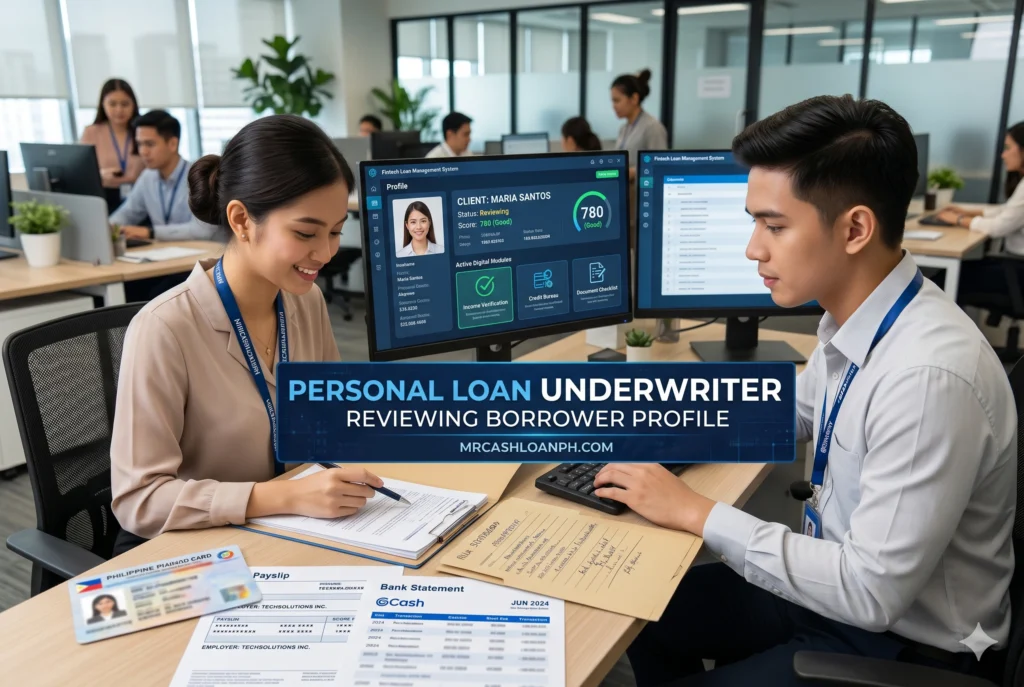
What Do Underwriters Actually Look For During Manual Reviews?
Underwriters evaluate context that automated systems cannot fully interpret.
When applications fall into gray areas, human reviewers assess the complete borrower story.
What Can Trigger Manual Review?
Common triggers include:
- Unusual income patterns
- Document discrepancies
- Identity verification concerns
- Large requested loan amounts
- Incomplete information
What Helps During Underwriter Evaluation?
Strong applications often demonstrate:
- Clear documentation
- Consistent information
- Verifiable income
- Stable financial behavior
- Reasonable borrowing requests
Underwriters generally seek evidence that supports repayment confidence.
How Do Risk Engines Separate Low-Risk and High-Risk Borrowers?
Risk engines categorize applicants into segments based on estimated repayment probability.
This process is called risk segmentation.
Rather than treating all borrowers equally, lenders group applicants into risk bands.
Possible outcomes include:
- Low risk
- Moderate risk
- Elevated risk
- Manual review required
Why Is Risk Segmentation Important?
Risk segmentation helps lenders:
- Control default rates
- Improve approval consistency
- Price risk appropriately
- Allocate review resources
This explains why two applicants with similar salaries may receive different decisions.
Can Verification Results Affect Risk Segmentation?
Absolutely. Verification quality has become a major decision factor.
Many lenders now integrate:
- Facial verification
- Device reputation checks
- Location consistency reviews
- Contact validation
- Identity screening
Poor verification outcomes can influence risk scores even when income appears sufficient.
How Important Is the Verification Process During Approval?
Verification has become one of the most critical components of digital lending.
The rise of mobile-first borrowing has increased fraud-prevention requirements across the industry.
Borrowers often focus solely on income documents while overlooking the importance of the verification process.
In reality, verification failures can prevent approval even before financial assessment begins.
Common Verification Issues Include:
- Blurry IDs
- Cropped documents
- Poor selfie quality
- Mismatched personal details
- Incorrect contact information
- Duplicate applications
Why Do Lenders Invest So Heavily in Verification?
Fraud losses directly affect lending sustainability.
Modern lenders therefore use layered controls combining:
- KYC systems
- Behavioral analytics
- Identity matching
- Risk engines
- Human review
This approach aligns with broader consumer protection, data privacy, and anti-fraud expectations within the Philippine financial ecosystem.
What Increases Personal Loan Approval Odds Without Manipulating the System?
The best strategy is improving application quality and demonstrating genuine repayment capacity.
Borrowers cannot control every approval factor, but they can strengthen many of them.
Practical Ways to Improve Approval Probability
- Submit complete and readable documents.
- Ensure application details are accurate.
- Maintain stable contact information.
- Avoid inflating income figures.
- Build positive repayment history.
- Reduce excessive debt where possible.
- Review credit information periodically.
- Apply only for realistic loan amounts.
Why Do Some Strong Borrowers Still Get Declined?
Approval decisions reflect lender-specific risk policies.
One institution may prioritize employment stability.
Another may emphasize credit history.
A third may focus heavily on verification outcomes.
Therefore, approval is never determined by a single factor alone.

What Should Borrowers Know About Credit Information Before Applying?
Credit information increasingly influences lending decisions across banks, digital lenders, and financing companies.
The Credit Information Corporation serves as the Philippines’ public credit registry, while accredited credit bureaus generate additional scoring and reporting products used by lenders.
Borrowers benefit from:
- Monitoring credit records
- Correcting inaccurate information
- Paying obligations on time
- Maintaining healthy borrowing habits
Responsible credit behavior tends to improve future financing opportunities over time.
Frequently Asked Questions About Personal Loan Approval Factors in the Philippines
What increases approval odds the most?
Stable income, consistent employment, manageable debt levels, accurate application information, strong verification results, and positive repayment history typically improve approval probability.
Does income matter most during approval?
No. Income is important, but lenders also assess credit behavior, debt obligations, verification quality, identity confidence, and overall risk profile.
Do lenders always check credit history?
Not always. Many lenders review available credit information, but some also rely on alternative scoring methods when traditional credit history is limited.
Can freelancers get approved for personal loans?
Yes. Freelancers can qualify if they can demonstrate reliable income through bank statements, contracts, invoices, platform earnings, or other acceptable documentation.
Does applying multiple times help approval chances?
Frequent applications within a short period can sometimes create additional risk signals. Improving application quality is usually more effective than repeatedly submitting applications.
Conclusion
Personal loan approval decisions in the Philippines are built around risk assessment rather than simple eligibility checklists. Modern lenders combine credit scoring models, risk engines, verification systems, income analysis, identity validation, and underwriting reviews to estimate repayment probability.
For borrowers, the most effective approach is preparation rather than guesswork. Accurate information, stable income patterns, responsible credit behavior, complete documentation, and strong verification results collectively strengthen an application. While no lender can guarantee approval, understanding how approval decisions are made allows borrowers to present a clearer, more credible financial profile and make better borrowing choices.
References
- Credit Information Corporation
Organization: Credit Information Corporation (CIC)
Resource: About Your CIC Credit Report
URL: https://www.creditinfo.gov.ph/about-your-cic-credit-report - Credit Information Corporation
Organization: Credit Information Corporation (CIC)
Resource: Submission of Data to the CIC
URL: https://www.creditinfo.gov.ph/submission-data-cic - Credit Information Corporation
Organization: Credit Information Corporation (CIC)
Resource: CIC Urges Lenders to Access Its Credit Database
URL: https://www.creditinfo.gov.ph/news-release-cic-urges-lenders-access-its-credit-database-issue-credit-reports-borrowers - Credit Information Corporation
Organization: Credit Information Corporation (CIC)
Resource: Accessing Entities and Credit Decisioning
URL: https://www.creditinfo.gov.ph/news-release-cic-enlists-106th-accessing-entity-enjoins-lenders-use-database-assessing-borrowers
Community & User Experience Sources
- Reddit
Organization: r/DigitalbanksPH
Resource: Sharing My Experience With CIMB Personal Loan
URL: https://www.reddit.com/r/DigitalbanksPh/comments/1lw54i8/sharing_my_experience_with_cimb_personal_loan/ - Reddit
Organization: r/phinvest
Resource: How to Access Your Credit Score
URL: https://www.reddit.com/r/phinvest/comments/ncpx5u/ - Reddit
Organization: r/FINNApp
Resource: CIC Philippines and Loan Approval Discussions
URL: https://www.reddit.com/r/FINNApp/comments/1s38h6a/credit_information_corporation_cic_philippines/
Last Updated on September 9, 2026 by David Vargas
