

When comparing loan offers, most borrowers focus on the advertised interest rate. However, the true cost of borrowing in the Philippines often includes processing fees, service charges, insurance costs, documentary taxes, and penalty fees that significantly affect affordability.
A personal loan with a lower headline rate may ultimately cost more than another loan with a higher rate if additional charges are deducted from proceeds or added throughout the repayment period. This is why understanding APR, effective borrowing cost, and amortization is essential before signing any loan agreement.
| Cost Factor | What It Means | Why It Matters |
|---|---|---|
| Monthly Interest Rate | Advertised borrowing rate | Does not always reflect total cost |
| APR (Annual Percentage Rate) | Annualized cost including fees | Best comparison metric |
| Processing Fees | Upfront administrative charges | Reduces actual cash received |
| Service Charges | Ongoing or one-time fees | Can increase effective cost |
| Late Fees | Penalties for missed payments | Can rapidly increase debt |
| Prepayment Fees | Charges for early settlement | May affect repayment strategy |
| Documentary Stamp Tax | Government tax on qualifying loans | Additional borrowing expense |
| Effective Interest Rate (EIR) | True borrowing cost calculation | Most accurate affordability measure |
Summary
Personal loan interest rates in the Philippines should never be evaluated using the advertised monthly rate alone. Borrowers should compare APR, Effective Interest Rate (EIR), fees, amortization schedules, and total repayment costs. BSP transparency requirements require lenders to disclose key borrowing costs, allowing consumers to compare affordability more accurately. Processing fees, service charges, late payment penalties, and pre-termination fees often create a significant gap between the advertised rate and the actual amount paid over the life of a loan. Assessing total cost rather than headline pricing leads to safer borrowing decisions and reduces long-term repayment pressure.
What do personal loan interest rates in the Philippines actually mean?
A personal loan interest rate represents only one component of borrowing cost. The real cost depends on how interest is calculated and what additional charges are attached to the loan.
Many borrowers see advertisements promoting rates such as 1.2%, 1.5%, or 2% per month and assume they are directly comparable. In reality, lenders may use different pricing structures:
- Add-on rates
- Reducing balance rates
- Flat-rate calculations
- Promotional rates
- Risk-based pricing
This creates a major comparison problem.
For example, a 2% monthly add-on rate can translate into a much higher effective annual borrowing cost than many borrowers expect because interest is calculated on the original principal throughout the loan term rather than the declining balance. Current Philippine lending disclosures increasingly emphasize Effective Interest Rate (EIR) and APR to improve transparency. These measures allow borrowers to compare loans using a common standard.
Why do lenders quote monthly rates instead of annual costs?
Monthly rates appear smaller and easier to market, but they often hide the full economic cost of borrowing.
A borrower may compare:
- Loan A: 1.5% monthly
- Loan B: 2.0% monthly
and assume Loan A is cheaper.
However, if Loan A charges:
- Processing fee
- Service fee
- Insurance fee
while Loan B has no deductions, the final repayment cost may be similar—or even lower for Loan B.
This is why experienced borrowers focus on:
- APR
- EIR
- Total repayment amount
- Net proceeds received
rather than monthly rates alone.
What is APR and why should borrowers care about it?
APR (Annual Percentage Rate) estimates the annual cost of borrowing and includes many fees associated with the loan.
APR helps solve the biggest problem in loan shopping: comparing different loan structures.
Instead of focusing on isolated charges, APR combines:
- Interest
- Processing fees
- Certain mandatory charges
- Other finance costs
into a single annualized figure.
How is APR different from the interest rate?
The interest rate measures borrowing cost on the principal, while APR attempts to capture the broader financial impact of the loan.
Example:
Loan Amount: ₱100,000
Offer A:
- 1.5% monthly interest
- No fees
Offer B:
- 1.2% monthly interest
- ₱5,000 processing fee
Although Offer B has the lower interest rate, the APR may be higher because the borrower receives less usable cash while repaying nearly the same amount.
For affordability comparisons, APR usually provides a more realistic picture than the advertised rate alone.

How can you calculate the real monthly cost of a personal loan?
The real monthly cost depends on principal, interest structure, repayment term, and all applicable charges.
Borrowers often underestimate how repayment terms influence affordability.
A lower monthly payment does not always mean a cheaper loan.
Consider a simplified illustration:
| Loan Amount | Term | Estimated Monthly Payment | Total Repayment |
| ₱50,000 | 12 Months | Lower | Lower overall cost |
| ₱50,000 | 36 Months | Much lower | Higher total interest |
Longer terms reduce monthly pressure but usually increase total borrowing expense.
What is amortization and why does it matter?
Amortization refers to the scheduled repayment of principal and interest over time.
With reducing balance loans:
- Interest declines as balance decreases.
- More principal is repaid over time.
- Outstanding debt gradually shrinks.
Reviewing the amortization schedule reveals:
- Total interest paid
- Payment allocation
- Remaining balance after each installment
This provides a much clearer affordability assessment than simply reviewing the monthly installment amount.
Why can longer loan terms become more expensive?
Longer repayment periods often create lower monthly payments but higher lifetime borrowing costs.
A common borrower mistake is choosing the longest available term simply to reduce monthly obligations.
While cash-flow pressure becomes easier to manage, interest accumulates for a longer period.
The affordability question should therefore be:
“Can I comfortably afford the payment while minimizing total borrowing cost?”
rather than:
“What is the lowest monthly installment available?”
Which hidden charges increase borrowing costs the most?
Processing fees, service charges, penalty fees, and prepayment costs often create the largest difference between advertised and actual loan costs.
Many borrowers focus entirely on interest rates while overlooking fee stacking.
Fee stacking occurs when multiple charges are applied simultaneously.
Common examples include:
- Processing fees
- Service fees
- Verification charges
- Documentary taxes
- Collection-related fees
- Late payment charges
What are processing fees and service charges?
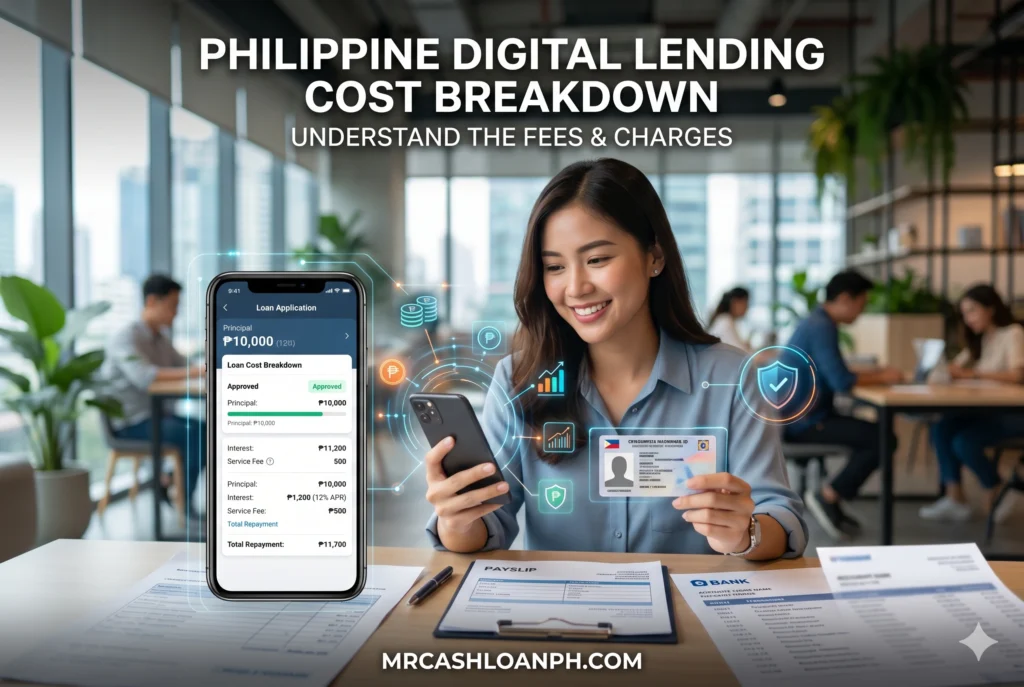
Processing fees are commonly deducted before loan release, reducing the amount the borrower actually receives.
Example:
Approved Loan: ₱100,000
Processing Fee: ₱3,000
Net Disbursement: ₱97,000
The borrower still repays based on the original obligation even though only ₱97,000 was received.
This increases the effective borrowing cost substantially.
Which fees deserve the closest attention?
Three categories often have the greatest impact on affordability.
- Upfront deductions
- Late payment fees
- Pre-termination charges
Some lenders impose fixed penalties for missed payments, while others apply percentage-based penalties. Certain lenders may also charge fees for early loan settlement. For example, published bank loan schedules in the Philippines often include late-payment fees and pre-termination charges that can materially affect total cost.
Why do personal loan rates vary so much between lenders?
Interest rates differ because lenders evaluate risk differently and operate under different business models.
Pricing is influenced by:
- Income stability
- Employment type
- Credit profile
- Existing obligations
- Loan amount
- Loan term
- Internal risk models
How do banks and digital lenders price risk differently?
Traditional banks often rely heavily on formal income records, while digital lenders may use broader alternative data.
Modern Philippine lending platforms increasingly use:
- Mobile-first onboarding
- OTP verification
- Selfie verification
- Device fingerprinting
- Fraud-detection systems
- Digital transaction patterns
These systems help estimate repayment risk quickly.
Because risk profiles vary, two borrowers requesting the same amount can receive different pricing offers.
Do freelancers and gig workers receive different rates?
They can, depending on how income consistency is evaluated.
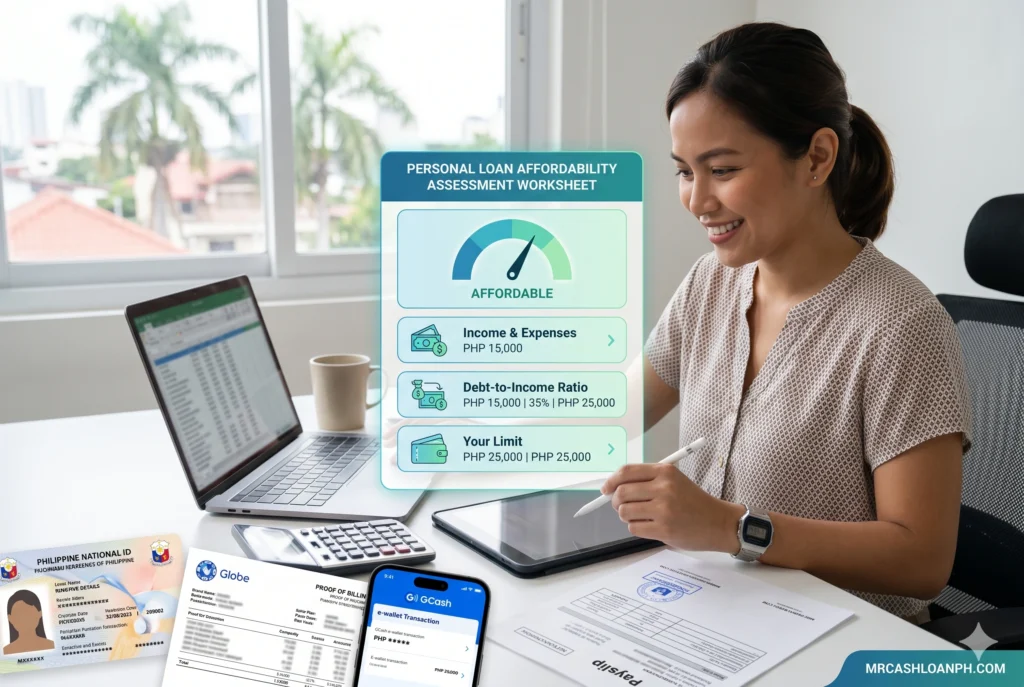
For salaried employees:
- Payslips
- Employment certificates
- Payroll history
may provide predictable income evidence.
For freelancers and gig workers:
- Bank statements
- E-wallet transaction history
- Platform earnings
- Client payment records
often become important verification tools.
The stronger the income documentation, the more favorable the pricing options may be.
What happens to borrowing costs when payments are missed?
Late payments can dramatically increase total loan costs through penalties, additional interest, and collection expenses.
Many borrowers evaluate affordability assuming perfect repayment behavior.
However, real-life cash flow disruptions occur.
Examples include:
- Delayed salary credits
- Freelance payment delays
- Medical emergencies
- Temporary income interruptions
How do late fees affect effective borrowing cost?
Even a single missed payment can substantially increase the overall cost of borrowing.
Potential consequences include:
- Fixed late fees
- Additional interest
- Collection charges
- Credit reporting impacts
When assessing affordability, borrowers should estimate both:
- On-time repayment cost
- Delayed repayment cost
This creates a more realistic financial picture.
Why is repayment timing so important?
Matching due dates with actual income cycles reduces the likelihood of penalty charges.
Many repayment difficulties occur not because a borrower lacks income but because cash inflows arrive after the scheduled due date.
Experienced borrowers often align:
- Salary schedules
- Freelance payment cycles
- Business cash flow
with repayment calendars whenever possible.
How does early repayment affect total loan costs?
Early repayment may reduce interest costs, but some lenders impose prepayment or pre-termination fees.
Many borrowers assume paying off a loan early always saves money.
In practice, loan contracts may include:
- Pre-termination charges
- Administrative settlement fees
- Minimum interest requirements
When does early repayment make financial sense?
Early settlement usually becomes attractive when interest savings exceed any applicable fees.
Borrowers should ask:
- Is there a prepayment penalty?
- How is the fee calculated?
- How much interest remains unpaid?
Only then can a true cost comparison be made.
What should borrowers check before signing?
The prepayment section deserves the same attention as the interest rate section.
Review:
- Early settlement provisions
- Penalty calculations
- Administrative charges
- Final payoff procedures
Ignoring these details can create costly surprises later.
How can you compare personal loan offers accurately?
The best comparison method is to evaluate total cost, not just the advertised rate.
Use this checklist:
Compare these five items first
- APR or EIR
- Total repayment amount
- Monthly amortization
- Net cash received
- All disclosed fees
Ask these questions before accepting any offer
- How much money will I actually receive?
- What is the total repayment amount?
- Are fees deducted upfront?
- Is there a late payment charge?
- Is there a prepayment penalty?
- What happens if I miss an installment?
This approach produces a much more accurate affordability assessment than rate shopping alone.
How do BSP transparency requirements help borrowers?
Philippine lending regulations emphasize disclosure so consumers can make informed borrowing decisions.
Borrowers should receive clear information regarding:
- Interest charges
- Effective borrowing costs
- Fees and charges
- Repayment obligations
BSP consumer protection initiatives encourage transparency and provide tools that help consumers evaluate loan affordability using Effective Interest Rate calculations.
A practical reality in today’s lending market is that legitimate lenders generally disclose costs upfront, while questionable operators often obscure fees or demand advance payments before disbursement. Community-reported experiences consistently identify advance-release fees as a major warning sign.
For borrowers also researching approval outcomes, it can be useful to learn how lenders make loan approval decisions, but affordability should always be assessed separately from approval likelihood.
Likewise, evaluating future payment capacity helps reduce repayment difficulties that often arise when borrowers focus solely on approval speed rather than total cost.
Frequently Asked Questions
What is the most important number when comparing loans?
APR or Effective Interest Rate is usually the most useful comparison metric because it captures more than the advertised interest rate.
Why do two lenders offer different rates for the same loan amount?
Different lenders use different risk models, funding costs, operational expenses, and borrower assessment methods.
What fees matter most?
Processing fees, late payment penalties, service charges, and prepayment penalties often have the greatest effect on actual borrowing cost.
Is a lower monthly payment always better?
No. Lower monthly payments frequently come with longer repayment periods, which may increase total interest paid.
Should I focus on APR or monthly interest rate?
APR generally provides a more complete view because it reflects the broader cost of borrowing.
Where can borrowers verify loan cost disclosures?
Borrowers should review official disclosures provided by lenders and use BSP consumer education resources when comparing loan offers.
Conclusion
Choosing a personal loan Philippines product based solely on the advertised interest rate can lead to costly mistakes. The most informed borrowers compare APR, Effective Interest Rate, amortization schedules, net proceeds received, and all applicable fees before accepting an offer.
Processing fees, service charges, late payment penalties, and pre-termination costs often determine the real affordability of a loan far more than the headline rate itself. Taking time to calculate total repayment obligations, review disclosure statements carefully, and match repayment schedules to actual income patterns helps create safer borrowing outcomes.
Responsible borrowing starts with cost transparency. When you understand the full price of credit before signing, you are far better positioned to protect your finances and make decisions that remain manageable throughout the repayment period.
References
- Bangko Sentral ng Pilipinas
Organization: BSP
Resource: Loan Calculator and Effective Interest Rate Consumer Protection Resources
URL: https://www.bsp.gov.ph/Pages/InclusiveFinance/LoanCalculator.aspx - Bangko Sentral ng Pilipinas
Organization: BSP
Resource: Financial Consumer Protection Framework
URL: https://www.bsp.gov.ph/ - Metrobank
Organization: Metropolitan Bank & Trust Company
Resource: Personal Loan Rates and Fees
URL: https://www.metrobank.com.ph/articles/personal-loan-rates-and-fees - Securities and Exchange Commission Philippines
Organization: SEC Philippines
Resource: Interest Rate and Fee Caps for Covered Loans
URL: https://www.sec.gov.ph/ - Credit Information Corporation
Organization: CIC
Resource: Credit Information System
URL: https://www.creditinfo.gov.ph/ - National Privacy Commission
Organization: NPC
Resource: Data Privacy and Consumer Protection
URL: https://privacy.gov.ph/
Community & User Experience Sources
- Reddit Philippines Lending Discussions
Resource: Borrower Experiences Regarding Fees, Penalties and Lending Transparency
URL: https://www.reddit.com/ - Reddit OLA Communities
Resource: Online Lending App Cost Discussions and Consumer Reports
URL: https://www.reddit.com/
Last Updated on September 9, 2026 by David Vargas
